A tonic for the heart

Herbs

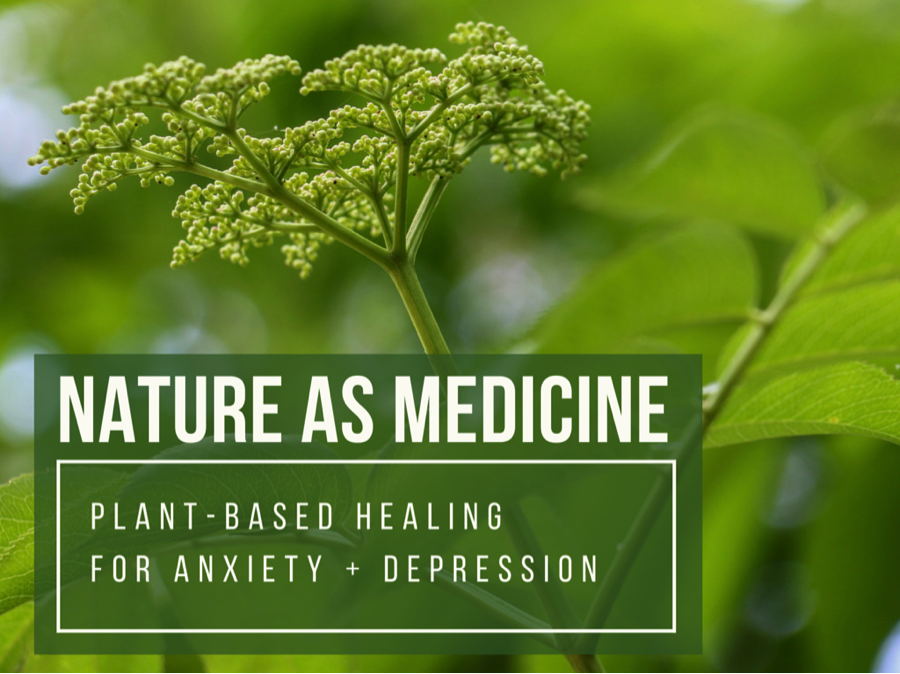
I stand barefoot in the garden. The late afternoon hours now arrive with a cool, methodical rain. While harvesting a healthy bundle of Motherwort, Leonurus cardiaca, I take a closer look at the mane of microscopic flowers that nestle themselves around the axis of each opposite-extending leaf pair. The blushing, orchid-shaped flowers are pleasant to the eye and sharp to the touch. I photograph the long-cherished plant while Teresa prepares to discuss the herb in her presentation on Nature As Medicine: Plant-Based Healing for Anxiety and Depression. She tells me that Motherwort is amazing. A member of the mint family, known anti-depressant and, as implied by the species name cardiaca, is “a gentle, strengthening tonic for the heart.”

There is a long history of herbal-based remedies for mental clarity and overall wellbeing. According to Ranchor Prime, “the sages [of Vedic civilization] carefully studied and recorded the herbal and medicinal properties of the forest.” But rather than simply consider the physiological uses of harvested plants, “the forest provided a place of peace and harmony with God where the spiritual goals of life could be pursued by forest sages” (Prime, 23).

Nature as Medicine

With nostalgia, I think back to my own experience of Vedic culture. It was the Fall of 2014 and I myself was a pilgrim of the Vaisnava tradition as I again walked barefoot through the sacred land of Vrindavan, India. We looked for Krishna—a Sanskrit name for God—in the landscape and cherished the forest as His home. It is here that I decided that the forest of Vrindavan is my home, too… even more than the lush forest of the Shenandoah. However, today I see these forests as united, and I remind myself that Vrindavan is always there present when carried in the heart.

The spiritual world is here and the material world is here. The difference is in your consciousness. When you have spiritual consciousness – you are in the spiritual world.
—Sacinandana Swami

My Home Is Deep in the Forest

For updates about the PLT Summer Internship, click here. We also post updates online using #PLTinterns. To get these updates please like us on Facebook and follow us on Twitter at @LivedTheology. To sign up for the Lived Theology monthly newsletter, click here.

Washing dishes and bursting bubbles

Washing Dishes

As my time at the Haven progresses, I find myself becoming accustomed to the daily tasks required to make the day shelter run. Especially in the kitchen, I often feel like there is a certain rhythm that characterizes the hours leading up to and during the preparation and serving of the meal. Akin to the motion of the waves, a circular pattern of preparation and clean-up has emerged that is only strengthened by the ebb and flow of the guests filtering through the breakfast line from 8:00-9:00 AM. This timing is a credit to those who run the kitchen and the countless volunteers who frequently give their time to learn the rhythm of the kitchen, making sure that breakfast runs smoothly. I too have felt swept up by this perpetual, almost musical tide of the Haven’s routine. I know that the coffee mugs must be placed, the fruit salad must be cut, eggs must be fried and served, and all the dishes must be washed and sanitized and that it will all start again tomorrow. This organization is what makes the Haven work. It makes sense in my head. It is, dare I say, comfortable?

The last thing that I would ever want is to detract from the routine. It is both logical and rational and allows the Haven to run efficiently both in terms of providing for immediate needs and balancing its budget. This organization is essential and any shelter could not succeed without this forethought and planning. This order is wonderful and fits seamlessly into my comfort zone and personality. At the same time, that’s the problem. I entered into this internship to step outside of my realm of comfortability because I believe that that is where God is found. If reading Loring, Nouwen, Day, and Ekblad have taught me anything, it is that working with the poor and oppressed is an adventure. It has intense moments of jubilation and theological breakthrough coupled with heartbreak and mourning, but it is only possible if we step out of what we deem is acceptable. We are entering into the lives of those on the margins with humility and respect, weakness and trembling, hoping to glimpse God’s Kingdom in the here and now. We open ourselves to be vulnerable and empathize with those that God created. But how can this be done when the novelty of our circumstances wears off? How can I interact with homeless folks when the routine I have created for myself creates two distinct social spaces; the work of the kitchen where I am secure and the true lives and stories of those being served? I, at times, perform my work, “serve” those who are in need, and then leave with nothing to think or write about. Within my security bubble behind the serving counter, no true theological reflection occurs. My bubble needed to be burst, and Lee helped that to happen.

Lee is one of the homeless men that frequently comes to the shelter for breakfast. He has done so for years and has also become accustomed to the receiving end of the Haven’s routine. The novelty for Lee wore off long ago. Last week, he showed me that the bubble of security that I unconsciously put up would and could not stand. After breakfast, Lee asked to come help me with the dishes. While this was a task that I usually performed alone as another fixed part of my routine, I was eager to have extra help, and we began to clean. Clunky and awkward to start, we soon developed our own rhythm. We were no longer two people on opposite sides of a counter living in different worlds, but rather two people working together. As previously explored by the likes of Peter Maupin, Clarence Jordan, Dorothy Day and countless others, the communal aspects of working for a common goal became evident quickly. Lee and me: talking, washing, and building community through work. It was a small moment, but profound. Maybe that is what hospitality fosters at the Haven. An opportunity for me to enter into a new situation, become lulled into a comfort zone and then humbled. A chance for God to crash into my bubble and dare me to step out to where Lee was–and where God was. Similarly, hospitality at the Haven gave Lee a place where he was treated with dignity and respect so much that he had the confidence to burst my comfort bubble with no fear of judgment. Meeting his immediate needs led to an outpouring of generosity and an opening for God to teach me incredible things through his actions. Perhaps God uses a theology of hospitality to dignify the margins, use the unprivileged to humble and teach the privileged, and to build community and friendship in the place of and across perceived social, racial and economic barriers. Bob Ekblad in his time having Bible studies in prisons said, “In my years visiting people here in the jail I have learned more from inmates than I ever learned in seminary” (Ekblad, 23) and I’m beginning to see where he’s coming from.

For updates about the PLT Summer Internship, click here. We also post updates online using #PLTinterns. To get these updates please like us on Facebook and follow us on Twitter at @LivedTheology. To sign up for the Lived Theology monthly newsletter, click here.

Maranatha

Holy Smokes

Nestled into my large leather chair in a smoke-filled room, I let the strands of scripture spin around in my mind. The daily rhythm of my internship takes a slight shift this week and next as I join the interns at my church in a course on ministry to the poor taught by Rebirth’s very own Mo. A man of many talents and a work ethic like no other, Mo not only runs the ministry I get to be a part of this summer, he also owns his own cigar shop-slash-ministry outpost, aptly named Holy Smokes. In many ways, the shop is more filled with the presence of God than many churches I’ve been in in my life. As I sit with the four other students in a circle of large leather recliners usually occupied by middle-aged men smoking cigars, various people walk in and Mo tells them all to pull up a chair and join the study. Inviting people in to be a part of how he’s pursuing the mission of God in the world is what Mo does best.

What Mo also does really well is tie together strands of truths from many different disciplines to form a coherent vision for how and why caring for the poor and hurting matters. In this course, we’ve covered a sociological understanding of the social construction of reality and how that affects any kind of cross cultural interaction; we’ve read Native Son and seen how literature can paint a vivid picture of black life and how the bullets of discrimination, racism, and hatred come flying at black Americans from every direction each and every day; we’ll talk through some of the history of racism by looking at Dr. King’s Letter from a Birmingham Jail; and where my formal education has been most lacking, we’ve delved into what the Bible has to say about poverty, racism, and where the Church fits into a world bursting at the seams with those two evils.

The structure of this course, just eight three-hour sessions, means that this information is coming at us like less like the cool mist of a sprinkler and more like the blast of a fire hydrant. At this point, I think my mind is still trying to soak in the wisdom from day one, and we’ve already finished day four. In another context, this influx of information would overwhelm me, as the normal pace that UVA has trained me to keep of consuming and digesting course content and then synthesizing and interpreting it to produce something of my own would send me into overdrive. But for Mo, the goal is not perfect retention and hasty production. Just like smoking a cigar (which Mo does just about any time, anywhere), the process should be slow, meditative, and enjoyable. For us, that means asking us to engage in a careful five-step process as we encounter this information: first comes exhortation, which is Mo’s role as the instructor; next, we deliberate, or wrestle, with the difficult topics we’re dealing with; thirdly, we internalize, or let those pieces of wisdom that we, through deliberation with the Holy Spirit, have deemed as truths sink into our hearts and minds; next, we look to see where God wants to specifically activate us within his work in the world; and lastly, we mobilize other people to come alongside and co-labor together.

Throughout the week I found myself mostly in the first three stages, trying to wade through the floodwaters of history, sociology, literature, and theology in my brain, with a few secretive forays into the fourth and fifth stages as my proclivity to plan and to do made it hard to resist peeking into the possibilities of what’s next. My struggle to keep myself from always considering the future is even greater now as I move into my final year of college. In many ways, I have looked at this internship, and the content of this two-week course within it, as resources in my process of discerning what direction I should take in the many upcoming decisions. For the most part, my process has been focused on me: my thoughts, my interpretations, and my future. God didn’t let it stay that way for too long.

The horrifying incidents of this week—the shootings of Alton Sterling and Philando Castile and the attack on police in Dallas—ripped my blinders off and reminded me that what I’m studying in this class, and what I’m doing in my internship, matters. And not just in a few months when I have to choose a thesis topic, and not just in the next year as I’m looking for jobs, but right here, right now. They should not just matter to me because they might pertain to my career path, but because they have to do with real human lives, those who have lost theirs and those that are irrevocably changed because of this week. If I thought I was overwhelmed at the beginning of the week with the high density of information in the class, I was utterly unprepared for how the knowledge of the shootings would hit me. No amount of steps would be able to get me to a place of understanding. No beautifully thought-out process could bring order to the chaos in my mind. As more tragic news kept rolling in like dark, billowing storm clouds, the only word that seemed adequate was maranatha, Aramaic for “Lord Jesus come.” I cannot fix the systematic injustice and the hate and the violence. I cannot stop the fear of “the other” from taking precedence in high-pressure situations and leading to tragic outcomes. I cannot change the fact that I am white and safe, and so many people are black and in danger. I cannot protect the young men and women I drive to and from Bible study every week from the physical and psychological dangers of their world. But I can, and I will, love deeply and pray constantly. I will say until my lungs give out: Maranatha, maranatha, maranatha. If it hasn’t already, I pray this cry will animate every encounter I have in the context of the internship this summer, and that it will work its way into every act of justice or mercy that I am ever able to be a part of. I pray for the passion of this cry to sustain me as I go to Bible studies, plan summer camps, and soak in the truth about God’s heart for the poor and oppressed from my comfy cigar shop chair.

For updates about the PLT Summer Internship, click here. We also post updates online using #PLTinterns. To get these updates please like us on Facebook and follow us on Twitter at @LivedTheology. To sign up for the Lived Theology monthly newsletter, click here.

Welcome to the yurt

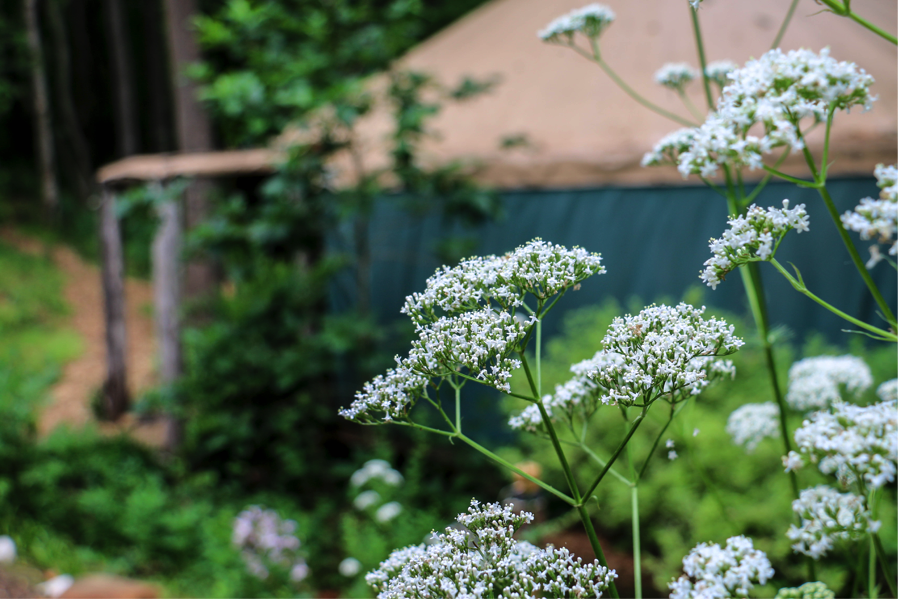
The YurtThe yurt is a special place. Despite standing 14 feet high at the tip of the ceiling dome and 7 feet high at the circular walls, the weather-proof canvas structure rests comfortably amidst the lush forest scenery. The perfect balance of ancient wisdom and contemporary design, a wooden platform secures this up-scale version of the traditional Mongolian housing, a design used by nomads for thousands of years. Our lovely little yurt…the perfect home for a backyard apothecary.

Upon stepping foot through the elegant glass door, I am overcome by an aromatic coziness completely illustrative of Teresa’s own welcoming nature. Directly to my left, wooden shelves cradle hundreds of labeled mason jars, filled to varying capacities with an assortment of dried herbs, crushed flowers, and spices. For myself, I brew a blend of dried spearmint and peppermint leaves, bundled in an organic coffee filter. After adding a dollop of local, wildflower honey, I join Teresa upon the couch.

Above me, raindrops tap the clear skylight with the sound of gently popping kernels of corn. We sit next to a flickering fire. As the hearth radiates from below, twinkle lights illumine the perimeter. Our attention finally turns to the MacBooks sitting on our laps and together we update the running list of indigenous herbs that we identified last week’s herbal first aid workshop.

Jars of HerbsEspecially after reading the Green Pilgrimage initiative, I am thinking a lot about how sacred spaces must be navigated in an ecologically conscious way. Green Comfort is an example of how ancient wisdom can be integrated into contemporary design through the use of practical methods of stewardship. From architecture to prayer, indigenous customs can be imbibed within our daily lives in uplifting ways.

It’s been decided. I’m living in a yurt for good.

For updates about the PLT Summer Internship, click here. We also post updates online using #PLTinterns. To get these updates please like us on Facebook and follow us on Twitter at @LivedTheology. To sign up for the Lived Theology monthly newsletter, click here.

Creating space

Doors
Throughout this week’s reading of Henri Nouwen’s Reaching Out, I was exposed to a markedly different style of writing than the memoir-like recounting of Ed Loring and the Open Door Community. Appearing much more pragmatic than Loring, Nouwen systematically spells out his “three movements of the spiritual life” illustrating the balance between “the poles of loneliness and solitude, hostility and hospitality, illusion and prayer” (Nouwen, 19). At the same time, Nouwen remains general enough to allow the reader to introduce their own circumstances, ideas and situations into the framework that he illustrates. Nouwen personifies his belief that “hospitality is not a subtle invitation to adopt the lifestyle of the host, but the gift of the chance for the guest to find his own” (Nouwen, 72). Similarly, true hospitality is one in which confrontation occurs as others see “our own life choices, attitudes, and viewpoints…that challenge strangers to become aware of their own position and to explore it critically” (Nouwen, 99). In essence, Reaching Out as a work is attempting to apply the same hospitality in its pages that Nouwen describes. He proposes the framework for how he understands and categorizes the stages of spiritual movement without restricting the reader. This work confronts the reader with a certain viewpoint on Christian spirituality and presses no further only creating space for the reader to think. It only hopes to instigate self-reflection and critical thought giving the reader a chance to formulate their own responses.

Using Nouwen’s definition and presentation of hospitality, it is only appropriate that I examine my current situation with a blending of his thoughts and my own. If that is the purpose of his writing, then this synthesis is the correct response after reading and reflecting upon his interpretation of the world around him. By applying these three movements with my experiences at the Haven and within my own heart and mind, a new and unique amalgamation could emerge.

First, the movement from isolation to solitude. In Reaching Out, “loneliness is one of the most universal sources of human suffering today” (Nouwen, 25). Stemming from this acute sense of loneliness is a desire to avoid it and distract ourselves from it. We attempt to rectify this deep loneliness by relationships with other people but soon find that “there is no one who cares and offers love without conditions, and no place where we can be vulnerable without being used” (Nouwen, 26). Searching for an end to this isolation, we attempt to quell our restless hearts in a number of ways. For me, I believe that my time at the Haven could threaten to devolve into something like this: trying to find purpose in helping homeless folks or busying myself to a point where I no longer think of “not belonging” (33) because I preoccupy myself. My need for community and unity becoming intertwined with my actions at this organization. Attempting to block out the nagging, “irking loneliness” (36) and quieting the thoughts in my head with “good deeds.”  Nouwen warns against such motivations claiming that “no friend or lover, no husband or wife, no community or commune will be able to put to rest our deepest cravings for unity and wholeness” (30). If wholeness cannot be found in my work at the Haven, then where is it located?

Second, the movement from hostility to hospitality. The world around us “seems to be increasingly full of fearful, aggressive people anxiously clinging to their property and inclined to look at their surrounding world with suspicion” (66). When loneliness and strife prevail, “our own need to still our inner cravings of loneliness makes us cling to others instead of creating space for them” (101). Spurred on by our excessive loneliness and inability to find solitude in open-ended questions, we suffocate others in an attempt to reduce our thoughts. Our relationships become nothing more than one-sided interactions in which we use one another, wringing out every last drop of comfort for our own gain. I also see potential for this in my time with the Haven: a time when my motivations for volunteering could be solely based on feeling better about myself. In the same way, working with the homeless pats my own ego and stops me from interacting in compassion, love and empathy. If hospitality cannot be achieved because of loneliness, then where is there hope?

Third, the movement from illusion to prayer. For Nouwen, this is the movement by which all the others fall into place. The truth is that “we need the willingness and courage to reach out beyond the limitations of our fragile and finite existence toward our loving God in whom all life is anchored” (113). It requires a faith and strength that can only be found in prayer which “is God’s breathing in us, by which we become part of the intimacy of God’s inner life, and by which we are born anew” (125). It is in this reality that we can know that God is “beyond our heart and mind” (126) while at the same time being as close to us as possible. In our striving for fulfillment, we use our preoccupations to stymie our lonely thoughts when the only true source of solitude is found in the mystery of an incomprehensibly big God. Divine intimacy and purpose is only grounded in shedding the “illusion that we know what life is all about, that we rule it and determine its values” (131). Control is placed in the hands of God, and it is only in this moment that my heart can be satisfied, isolation can be invaded by solitude, and hostility is trumped by compassion and hospitality. If my time at the Haven stems from this transition from illusion to prayer, then it will not be about boosting my ego or suppressing my longing, but rather an honest desire to create space for others.

For updates about the PLT Summer Internship, click here. We also post updates online using #PLTinterns. To get these updates please like us on Facebook and follow us on Twitter at @LivedTheology. To sign up for the Lived Theology monthly newsletter, click here.

When comfort becomes uncomfortable

Jacksonville Skyline

As a college student who spends eight months of the year roughly 700 miles away from home, I treasure summer mainly for the opportunity it allows me to spend an extended period of time in my beloved home of Jacksonville, Florida. For me, home is a place of comfort, rest, and security. Home contains sweet memories of the past and an assurance of security and stability in the future. Home is my anchor in the world. Besides my three years at UVA, I have lived all of my (almost) 21 years in Jacksonville, and 18 of those in the same house. To say that I have strong ties to this place is an understatement. So when the opportunity to spend another summer at home, this time working with an urban youth ministry, arose, I excitedly signed on to work with a group of inner-city kids I hadn’t even met yet, not really knowing what to expect but hopefully anticipating the adventures ahead. The internship through Project on Lived Theology checked all the boxes of an appealing summer gig: hanging out with kids, learning about urban ministry first hand, reading cool stuff with an awesome professor, and spending the summer at home with my family.

As excited as I was (and still am) to be home, I suspected the emotional, familial, and material comfort and safety provided by my home would create some tensions throughout the summer. The most obvious manifestations of the inevitable dissonance were geographic and material. The riverfront, all white, gated neighborhood in which I grew up and which I still call home is one of the many vestiges of the segregation that created and still undergirds most cities in the South to this day. Jacksonville is no exception. A city with a painful racial past, Jacksonville has yet to come to terms with what it looks like to reconcile long-standing racial, economic, and social differences. The people who benefit most from these differences, and thus those who stand to lose the most if things change, are the well-to-do white residents of Jacksonville who I have always called my neighbors, classmates, and friends, not to mention myself. This aspect of being home has not changed, but what has is my perspective on it. Instead of not having to think twice about the normalcy of my context, I now cannot drive through the gates to my yacht club home without the nagging pinprick reminders of the profound inequality represented by every aspect of where I come from.

The assurance of my physical comfort and safety acts as a buffer not only from the material inconveniences of the world, but the emotional and psychological ones as well. This safety has also become a source of discomfort throughout the past few weeks. As I finished up a particularly disheartening reading one evening, I really needed to clear my head. And so I did what I often do when I need to relieve stress: I went for a run. The sun had already set, so it was fairly dark, but I gave no thought to the time because my neighborhood poses no threat to my safety. It wasn’t until about halfway into my jog that I experienced the discomfort of the irony: even if I tried to jump the intellectual, emotional, and material hurdles necessary to identify myself with the poor and marginalized in this society, it is still all too easy for me to escape. That night, my escape was being able to go on a run without fear for my safety. My escape was being able to think about the parts of my life other than the internship in urban ministry that, realistically, only takes up a small portion of my daily existence at this point. My escape was, and will continue to be, my identity as an educated, white female. I do not want to hide behind fancy rhetoric about my white privilege that makes me sound more self-aware than I really am, but I do think identifying the ways that my identity provides me power and advantage is important. Acknowledging the implications of my place in society is a key step in the process of engaging in ministry with people whose experiences have been marred by the very structures that afford me these advantages.

So how do I acknowledge my safety and security, my privilege and power, in a way that respects the differences in experience between the kids I’m working with and myself, while not erecting an unnecessary barrier? That I still don’t know. I do not know how to react when the girls I’m driving home insist that we go to my house for a sleepover, knowing that they may not have ever been to my side of town before and unsure of what they will think of me when they see where I come from. I do not know how to handle the uncomfortable dissonance of doing my readings in my comfy bed or on my shaded porch, able to put down the horrifyingly unjust world that Pecola from The Bluest Eye inhabits and go for a walk by the river, or eat dinner with my family, or go for a swim.

I still love being home, and wouldn’t want to be anywhere else, but I’m realizing that the comfort I’ve always been able to wrap myself in is the cause of the most discomfort I will experience this summer. At this point, I think that the best way I know how to move forward is to move into the discomfort, not away from it. When differences arise, I know I need to investigate those with humility and grace, asking more questions rather than trying to provide answers. I want to listen to stories and soak in their meaning, like dry Florida grass soaking up the afternoon rain. I want to build relationships based not on outward similarities, but on the “common longing for supportive connections with others [that] reflects a spiritual aspect of our humanity” (Traci C. West, Disruptive Christian Ethics, 62). I’m here to listen, to learn, and to love past the discomfort and the self-consciousness. Tension means stretching, stretching means growing, and growing means living, the way we were designed to live.

For updates about the PLT Summer Internship, click here. We also post updates online using #PLTinterns. To get these updates please like us on Facebook and follow us on Twitter at @LivedTheology. To sign up for the Lived Theology monthly newsletter, click here.

Speak to the earth, and it will teach you

Gathering Herbs

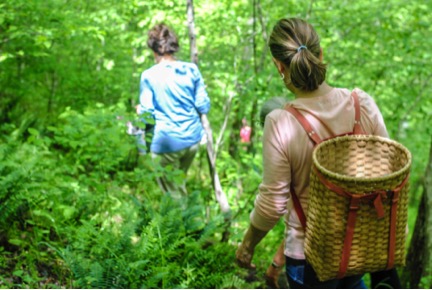
I follow her into the forest. Teresa descends a narrow, earthen path into the lush foliage surrounding the apothecary grounds. She reaches towards a nearby pine. From the tip of the branch, where the mature and deep emerald needles end, Teresa plucks a batch of soft, youthful and vibrantly light green ones. To my surprise she places them into her mouth and, in her gentle Southern drawl, begins to glorify their pleasant taste and extraordinary health properties. Sort of citrus-y… and full of Vitamin C, just like an orange. She tells me. If you were starving in the woods, you could survive on these alone.

As I gather a similar collection of budding pine and place it in my mouth, I relish the familiar taste of citrus astringency, the similar antiseptic quality of orange pith. The texture is waxy like a succulent plant and the inside is no softer than a very thin mung bean sprout might be. For the rest of the day I run back and forth between the apothecary and my favorite patch of pines. Another student laughs at my newfound addiction. At least it’s a healthy one.

Teresa and I spend many moments walking through the woods identifying wild, native herbs and nibbling on hidden superfoods like stinging nettle seeds. I am inspired by her sense of knowing and connectedness with the living scenery. But most of all, I admire her constant acknowledgement of herbs, plants, and other living organisms as divine emanations for us to learn from. To me, her relationship with the forest is captivating and reminds me of a passage from Vedic Ecology through during which Indian Environmentalist Pancavati Banwari is quoted as emphasizing our inherent unity with the forest.

[We] are also a part of that forest. It is not that [we] are outside the forest. In India, the world is mahavan [or the great natural forest where all species of life find shelter]—[we] can reorder it, but [we] cannot be outside it.” (Prime)

As I acknowledge my inherent connection to all of life, I begin to cultivate a deeper sense of responsibility and stewardship than I ever found through Environmental Science lectures or textbook readings. The direct experience that the very plants that grow outside my window can nourish and sustain me becomes the platform off of which I cultivate reverence and prayer for the artist behind the scenery.

Forest Flowers

7 But ask the animals, and they will teach you, or the birds in the sky, and they will tell you;
8 or speak to the earth, and it will teach you, or let the fish in the sea inform you.
9 Which of all these does not know that the hand of the LORD has done this?
10 In his hand is the life of every creature and the breath of all mankind. (Job 12:7-10)


For updates about the PLT Summer Internship, click here. We also post updates online using #PLTinterns. To get these updates please like us on Facebook and follow us on Twitter at @LivedTheology. To sign up for the Lived Theology monthly newsletter, click here.

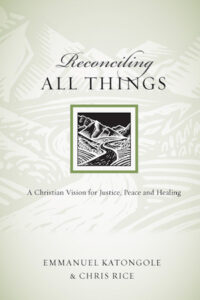
On the Lived Theology Reading List: Reconciling All Things

Reconciling All ThingsA Christian Vision for Justice, Peace, and Healing

We live in a broken and suffering world, but how is genuine reconciliation achieved? And is it attainable apart from a biblical perspective? In Reconciling All Things, Emmanuel Katongole and Chris Rice argue it is not. Instead, they “cast a comprehensive vision for reconciliation that is biblical, transformative, holistic and global.” Incorporating the Christian story and their own experiences with peacemaking at home and abroad, Katongole and Rice create a rich, biblically-grounded resource faith believers and the church can utilize in working towards Jesus-centered reconciliation in everyday life.

PLT contributor Therese Lysaught reviews:

Reconciling All Things is a faithful book, glowing with the joy and hope that come from walking with God and God’s people in the world. Inviting all to join in God’s reconciling work across the myriads of ways we live in brokenness, Katongole and Rice do a new thing–they retrieve a deeply theological vision of God’s gift of reconciliation and show what the inbreaking of this gift looks like in the real stories of people who have embarked on this journey. These stories of pain and hope make clear that the real work of reconciliation is not as much about programs, strategies or fixing all things as it is about the ordinary, mundane, daily work of living faithfully and patiently in our local, particular, face-to-face contexts. And if we do, if we enter humbly into God’s work in the world, what can happen? New creation!”

Find a longer description on the book here.

Emmanuel Katongole, a Catholic priest ordained by the Archdiocese of Kampala, has served as associate professor of theology and world Christianity at Duke University, where he was the founding co-director of the Duke Divinity School’s Center for Reconciliation. Katongole’s research interests focus on politics and violence in Africa, the theology of reconciliation, and Catholicism in the Global South. His others publications include The Sacrifice of Africa: A Political Theology for Africa (2010). 

Chris Rice is the Duke Divinity School Senior Fellow for Northeast Asia. Chris Rice has written for such magazines as Sojourners, Christianity Today and Christian Century. His other publications include Grace Matters (2003) and More Than Equals (2000), coauthored with Spencer Perkins. 

For more of “On the Lived Theology Reading List,” click here. To engage in the conversation on Facebook and Twitter, @LivedTheology, please use #LivedTheologyReads. To sign up for the Lived Theology monthly newsletter, click here.

Always cut the tomatoes

TomatoesIn my first week at the Haven on Market Street in downtown Charlottesville while we prepared breakfast, one of the volunteers asked the kitchen supervisor if she should cut up the small tomatoes for the daily pan of cooked vegetables served at breakfast. The response was a resounding “Yes! Always cut the tomatoes.” It was a seemingly innocuous exchange between volunteer and manager, but the explanation was more profound. “I don’t know! A cut tomato shows a little bit more preparation and care than tossing them into the pan uncut.” The significance of such a statement was lost on me until I began to read through Ed Loring’s encounters with the homeless recounted in I Hear Hope Banging at My Back Door.

Throughout the Open Door Community, a Christian residential community in downtown Atlanta, hope radiates in all the dark and unseen corners of homelessness. Ed Loring, the community’s director, can be disgusted by “The Hell of Homelessness” (Loring, 20) which is devoid of comfort, a necessity that “can make us liars and cheats” (15) leading to inequality and oppression. In the same breath, Loring hangs on to hope that “the journey towards justice is the journey to life, to salvation and healing” (8). For Loring and the Open Door, this dichotomy is engrained in their eschatology. In their battle to end homelessness, there is a balance between the temporary pain, heartbreak, and struggle that sometimes characterize their present battle for the end of homelessness and the unflinching and perpetual hope found within the striving for future justice. They are “betting their [lives] on the victory of the cross, on the ultimate justice on Earth” (Loring 72). This hope cannot be shaken by present misfortune and loss brought about by ever-expanding injustice in Atlanta and beyond. It is also unhindered by the blunt realization Loring has that he will not experience the eradication of homelessness in his lifetime. “I can see it; I’ll never touch it” (72). In Atlanta, the Open Door Community has come to the conclusion that they will work their entire lives in order to see change in the deeply entrenched injustice found within their city’s institutions, but will never actually get to see it come to fruition in its totality. The Open Door Community sits in the hell of homelessness refusing to exhibit “a stunted moral growth as becomes those who flee social problems rather than resolve them” (46). They choose to promote “a suffering sacrificial love in accepting the consequences of life with, among, and on behalf of the oppressed and prisoner” (69-70). Encouraged by their encounters with people in Atlanta who are homeless, and spurred on by acts of kindness and love, the Open Door Community faces injustice head-on knowing that they will ultimately be victorious. This may not come during their lifetimes because they are trying to uproot injustice that has been entrenched in Atlanta for generations. Rather, they choose to listen to the hope banging at their back door even when the rest of the block suggests that despair and discouragement should be the appropriate response.

Which brings us back to the aforementioned encounter in the kitchen of the Haven. While there are notable differences between the two organizations–Atlanta and Charlottesville are two different places with different histories–this hope for the future is a distinct commonality. At its core, the Haven is supposed to be what the name suggests; a haven. Like the Open Door, the Haven is “a place of hope where people are given a respite from the daily challenges they face and access to assistance to help overcome them” (Haven Volunteer Manual, 7). In both situations, the desire to eradicate homelessness is the ultimate goal. However, what if these goals are never fully realized in Charlottesville during our lifetimes? Will we become discouraged if we do not see the Promised Land? That is why the tomatoes should be cut. It is a tangible manifestation of the hidden hope to which every volunteer and staffer at the Haven clings. A deep, transcendent hope that care and hospitality, kindness and sacrificial love will not return void. A hope found in the “simple moments and endeavors that redeem life and fill our cups to the brim of love and hope” (Loring, 20). Because we desire to see Charlottesville’s homeless population cared for and to have their immediate needs met, we cut the tomatoes. Because we hold on to an unflinching and undeterred hope that one day homelessness will be eradicated and every person in Charlottesville will have a home, we cut the tomatoes. Ed Loring hears hope when the homeless bang on the back door of the Open Door Community seeking respite; I see hope in the cutting of the tomatoes in the kitchen of the Haven.

For updates about the PLT Summer Internship, click here. We also post updates online using #PLTinterns. To get these updates please like us on Facebook and follow us on Twitter at @LivedTheology. To sign up for the Lived Theology monthly newsletter, click here.

The best-laid plans

I love how God changes our plans. I had a plan for my first blog post; I actually had quite a bit of it written. I planned to give a nice introduction to my summer, using a couple of anecdotes and bits of wisdom gleaned from the first few meetings I had with my site mentor Mo. I planned to crack open the window into who I was and what my summer might look like. If this plan had transpired, my first reflection would have been a pretty good representation of my world as I tend to prefer it: organized, coherent, neat, thoughtful, not straying too far outside my comfort zone. As I would find out while sitting in a circle on a living room floor with a group of inner city middle school girls I had met an hour earlier, God had other plans.

WindowsAs tends to happen in life, God didn’t crack the window open so I could peek in and go around to walk through the door at my leisure. He blew that window wide open and pushed me through it, into a place where violence, rape, and sexual assault do not exist as words on a page and thoughts in my head but as an actual heart and mind and body, an actual human, sitting across from me. I had no idea that I was walking into what, as I was later informed, was the hardest night of bible study they’d ever had. No longer could I stay in my comfortable world of thoughts and ideas. The reality of the tragedy, injustice, and pain that these girls face everyday came crashing down on me that evening.

Instead of sitting in a pristine classroom at my prestigious university discussing race theory, liberation theology, and educational performance gaps with other students who think and act pretty much exactly like me, I was hit with the reality of what all the models and statistics and philosophies try in vain to communicate. I had to face the reality that “all our phrasing – race relations, racial chasm, racial justice, racial profiling, white privilege, even white supremacy – serves to obscure that racism is a visceral experience, that it dislodges brains, blocks airways, rips muscle, extracts organs, cracks bones, breaks teeth,” as Ta-Nehisi Coates, a prominent journalist and public voice on race in America, puts it (10). As I have spent the last few semesters discussing in my theology of liberation classes, I saw clearly the power of the embodied encounter with the injustice and pain I have intellectually wrested with over the past years. Like the bones and teeth of black men and women broken by the violence of racism, the window through which I had always peered into “urban life” and “the race issue” was smashed to pieces as I listened to the very visceral experience of one of the sweet, beautiful, joyful girls sitting in that very same circle with me. But as I sat in pain and tears with them, a strange and beautiful thing happened: I saw the sadness and heaviness dissipate and turn into the beginnings of triumph and joy. I saw the power of declaring light into the void of darkness. I saw John 16:33 (“In this world you will have trouble. But take heart! I have overcome the world”) take on more meaning than it ever has. I saw, very distinctly, the strange glory of the paradoxical Gospel of Christ.

When I left the house that night my mind swirled with quite the assortment of emotions and questions. How could a night that started so heavy end with singing Adele at the top of our lungs as I dropped the girls off at the housing project where they live? What in the world are any of us supposed to do with the reality of the violence that lands upon the bodies of the most vulnerable in our midst? This question turned my thoughts to my reading for the week, Coates’ memoir, which he framed as a letter to his fifteen-year-old son. Coates fills the pages of his memoir with this and many other questions. Although there are many distances between us, I relate to Coates in this propensity to question. My life of order and neatness doesn’t have room for the mess that confusion and not-knowing drag in, so I ask questions and try to make sense of the world. What I have been in the process of learning over the course of the past few years, however, is that even in the absence of direct answers, “the questions matter as much, perhaps more than, the answers” (116).

So, like Coates, I am setting out on my own road laid with more questions than answers, illuminated only one brick at a time as I sometimes tiptoe, at other times sprint, and occasionally trip my way down it. Like Coates, I cannot claim to have any answers, nor do I really think answers are the point. However, very much unlike him, I believe in so much more than the struggle that he says defines all life not lived within the “Dream.” Perhaps this is a naïve perspective, developed through my privileged existence within this Dream that has only ever had the smallest of holes poked through its cozy thickness. But maybe, just maybe, I am right. Perhaps there is hope, a hope that can be found, in my experience, on every page of the Scriptures. I have not often found that these pages hold all the answers, but I have never found anything in this life that holds more hope. This has been true in my easy, privileged, comfortable life, just as it is, miraculously, true in the lives of the girls who I will have the honor of coming alongside this summer, girls whose lives are inconceivably and tragically harder than mine has ever been. Although it might not make sense to Coates, I believe the only hope strong enough to turn those tears of pain and anger and sadness that I witnessed and shared the other night into glimmers of hope washing away, one drop at a time, the dirt and grime of the evil committed, is the hope of the Gospel. As one of the leaders said that night, echoing the cry of a man transformed by Jesus’s healing, “Lord, I believe; help my unbelief!” (Mark 9:24).

For updates about the PLT Summer Internship, click here. We also post updates online using #PLTinterns. To get these updates please like us on Facebook and follow us on Twitter at @LivedTheology. To sign up for the Lived Theology monthly newsletter, click here.