PLT Interns to Present on Summer Partnerships

2016 interns: Tessa Crews, Brit Dunnavant, Elizabeth Surratt Theological Reflections on Service

On Thursday, September 15th, the 2016 intern cohort, including Tessa Crews (Col ’16), Brit Dunnavant (Col ’17), and Elizabeth Surratt (Col ’17), will share stories from their summer service experiences. The reflections will begin at 7:00pm at Common Grounds in Charlottesville. The event is free, and the public is invited to attend. Light refreshments will be served.

The Summer Internship in Lived Theology is an immersion program designed to complement the numerous existing urban and rural service immersion programs flourishing nationally and globally by offering a unique opportunity to think and write theologically about service. Crews spent her summer at the Green Comfort School of Herbal Medicine, while Dunnavant worked at The Haven and Surratt partnered with Rebirth Community Ministries.

Read the intern blog here, and connect to the event on Facebook. For more information on the Summer Internship in Lived Theology, click here.

For updates about the PLT Summer Internship, click here. We also post updates online using #PLTinterns. To get these updates please like us on Facebook and follow us on Twitter at @LivedTheology. To sign up for the Lived Theology monthly newsletter, click here.

On the Lived Theology Reading List: Dear White Christians

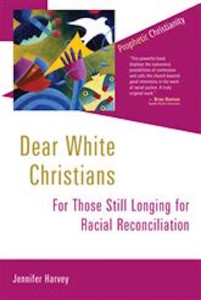
Dear White Christians: For Those Still Longing for Racial Reconciliation, by Jennifer HarveyFor Those Still Longing for Racial Reconciliation

Many faith believers affirm justice-centered theology, working towards a model of racial understanding and peacebuilding. In Dear White Christians, author Jennifer Harvey offers a dramatic alternative to the popular reconciliation model: a reparations paradigm. Despite efforts in and since the Civil Rights Movement, Christians have failed to understand the work required for peacebuilding, notably repentance. Imperative to challenging oppressive social institutions is the honest confrontation of “white” racial identity within historical and modern contexts. Although deep racial tensions continue to divide the church and society at large, Harvey’s publication offers a Biblically-rooted justice to help all people envision new racial possibilities.

PLT Contributor Jonathan Wilson-Hartgrove reviews:

“A gospel for white people, this book calls for nothing less than laying down the trump card of reconciliation for the sake of true repentance and conversion. Jennifer Harvey is proclaiming truth. Listen to her.”

PLT Contributor Lisa Sharon Harper writes:

Dear White Christians is a must-read. This kind of unflinching analysis is both rare and powerful. Through thorough analysis coupled with prophetic vision, Harvey decodes the mystery of the failure of the ‘racial reconciliation’ movement and offers clear direction forward toward the repair of our racialized society.”

For more information on this book click here.

Fellow travelers are scholars, activists, and practitioners that embody the ideals and commitments of the Project on Lived Theology. We admire their work and are grateful to be walking alongside them in the development and dissemination of Lived Theology.

Jonathan Wilson-Hartgrove is a writer, speaker and founder of the Rutba House, a house of hospitality where the formerly homeless are welcomed into a community that eats, prays, and shares life together. He is also an associate minister at the historically black St. Johns Missionary Baptist Church. His publications include Strangers at My Door: A True Story of Finding Jesus in Unexpected Guests (2013) and New Monasticism: What it Has to Say to Today’s Church (2010).

Lisa Sharon Harper is Sojourners Chief Church Engagement Officer, and previously served as founding executive director of New York Faith & Justice. She is committed to tax reform, comprehensive immigration reform, health care reform, poverty, racial and gender justice, and transformational civic engagement. Her publications include Forgive Us: Confessions of a Compromised Faith (2014) and Left, Right & Christ: Evangelical Faith in Politics (2011).

For more of “On the Lived Theology Reading List,” click here. To engage in the conversation on Facebook and Twitter, @LivedTheology, please use #LivedTheologyReads. For more recommended resources from our fellow travelers, click here, #PLTfellowtravelers. To sign up for the Lived Theology monthly newsletter, click here.

Walter Brueggemann to Lecture in Charlottesville

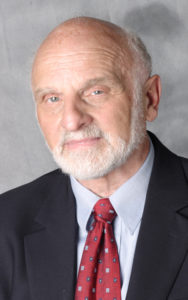
Walter BrueggemannUsing rhetorical criticism as Scripture analysis

On Saturday, September 17th, Walter Brueggemann will deliver two guest lectures at Westminster Presbyterian Church in Charlottesville, Virginia. Brueggemann’s first lecture at 11:00 am, entitled “Follow the Money,” will review the ways in which the Bible characteristically responds to “an economy of extraction” and proposes alternatives to such practice. Following a lunch intermission, he will deliver a second lecture reflecting on the way in which chosenness (ancient Israel, the Church, the USA, or whites) tilts regularly toward violence in “Choosing Against Our Chosenness” at 1:30 pm.

Both events are free, and the public is invited to attend. Lunch will be held between lectures and Brueggemann’s most recent books will be available for purchase. Free parking is also available onsite.

Brueggemann’s lectures are sponsored by the Endowed Lectureship in Contemporary Theology, WPC and co-sponsored by the Virginia Center for the Study of Religion and the Institute for Advanced Studies in Culture.

Walter Brueggemann is known as one of the most influential Bible interpreters of our time. The author of over one hundred books and numerous scholarly articles, he continues to be a highly sought-after speaker. Brueggemann has served as faculty at two institutions in his career: Eden Theological Seminary (1961-1986) and Columbia Theological Seminary (1986-2003). He is currently William Marcellus McPheeters professor emeritus of Old Testament at Columbia. His publications include Theology of the Old Testament (1997), Message of the Psalms (1985), and The Prophetic Imagination (1978).

For more event details and up-to-date event listings please click here to visit the PLT Events page. We also post updates online using #PLTevents. To get these and other news updates, please like us on Facebook and follow us on Twitter @LivedTheology. To sign up for the Lived Theology monthly newsletter, click here.

I lift my eyes up to the hills – part 2

Whitewater rafting

As I mentioned in my last post, our camping trip provided a lot of opportunities to for all of us to take risks. The biggest risk we asked the girls to take was whitewater rafting, the idea of which terrified them all, and they certainly let us know that. After wrangling them all into their swimsuits, water shoes, and safety gear, we managed to get them into the boats, and after a few safety instructions from our guides Parker and Gareth we were on our way. Much to their relief, our first rapid was not the large drop off created by the dam release, as they thought at first, but a nice, easy class II. As we got the hang of listening to Gareth and working together to navigate the rapids, the girls’ fear and trepidation began to turn to delight and excitement as we conquered each successive rapid. At one point, maybe three or four rapids in, one of the girls behind me emphatically declared that she was now ready to go back and do that first waterfall now. Seeing the fear and uncertainty wash away before my eyes filled me with an inexpressible joy that I think was just a little glimpse of the joy the Father must feel when he sees us trust him to lead us into rough, uncharted waters and we discover how exhilarating a life of faith can be.

As I thought and prayed about it, God revealed more about how our rafting experience reflects life in the Kingdom of God, and as cheesy as it may be, this metaphor proved a useful instructional tool to process through with the girls. From the outset it was important that we were all aware that rafting is an inherently risky activity, filled with a good deal of uncertainty. When one decides to follow the teachings of Jesus as reflected in Christian scriptures, it’s a leap into uncharted waters. Really the only way we were able to convince the girls to take the plunge was by assuring them of the many ways their ultimate protection was taken care of.

Before we even got on the water, each of us put on the required safety gear: a helmet, life jacket, water shoes, and paddle. Similarly, in Ephesians 6:10-18, Paul describes the way that a Christian should clothe him or herself with the “whole armor of God,” including the “breastplate of righteousness,” shoes with the “readiness to given by the gospel of peace,” the “helmet of salvation,” and the “sword of the Spirit” (in this case we’ll say “paddle” of the Spirit). Along with the gear we received a detailed presentation on safety procedure and what to do in pretty much any situation imaginable. We were surely still nervous as we boarded the bus that took us to the river, but we did take comfort in the protection of the gear and the knowledge we’d just acquired.

Even with all of this gear, it still wouldn’t be the most pleasant experience to be dropped in and sent down the river, trying to battle rocks and trees as the current sweeps you along. Thankfully, we were able to tackle the rapids from the relative comfort of a raft, with the added support of other people to paddle with you. In our Kingdom metaphor, the boat and the crew are the Church and the body of Christ, put in place so that no one will have to navigate life in isolation. Within the boat we had pace-setters sitting up front to keep us in rhythm. It was important that these members were in sync, as everyone else looked to them and followed their lead. These pace setters, in the context of the Church, would be older, more mature and experienced believers who are a resource for mentoring and discipleship of younger believers. One of Rebirth’s goals as an organization is to provide “pace setters” to speak into the lives of the kids in the ministry, to make sure they have people to support and encourage them in pursuit of a Christ-centered life.

And then, of course, we come to the most important part: the guide. No amount of safety gear, or instructions, or fancy rafts, or other rafters, could have kept us safe if it weren’t for our guides. They knew the river forwards and backwards, all the places to avoid and all the ways to get down it safely. They were clear and direct with their instructions, and although they would’ve been able to navigate the river alone, they still involved us in the process. Despite our best intentions, there were many times where we were unable (or unwilling) to follow directions perfectly; most often when going through a big rapid, your first instinct is to stop paddling and hold on for dear life. Even still, our guide never got mad or wavered in his determination to get us through safely. They did not, however, only focus on protecting us; they also made sure that the process was enjoyable, and even gave us opportunities to challenge ourselves by taking optional rapids just for fun. If our two rafting guides, who had only known us for a period of minutes, hopped in a raft and promised to get us to the end of the river safely while helping us enjoy it as much as possible, how much more does the heavenly Father who created and knows us each intimately, want to protect us and see us take delight in the world he created?

More than any other part of this metaphor, Rebirth staff member Lori and I wanted to make sure each girl understood the truth behind this somewhat silly comparison: we believe in and serve a God who guides us through each rapid we encounter in life. Particularly for these girls, who have seen more rapids in their twelve to eighteen years than many people will in a lifetime, we need them to know that God not only guides us, but is also there in the boat, fighting for us, even when we drop the paddle, close our eyes, and hold on tight. And along with protecting us, God wants us to enjoy his creation, to take delight in the excitement of life’s joy and beauty.

As mentors and leaders, there’s no shortage of wisdom and experience the staff of Rebirth wants to impart on the kids in the ministry, and I see them work tirelessly at this goal every day. In my capacity as an intern, my main roles were to serve and observe, but more than anything I think I was there to learn. From Mo, I learned so much about calling and commitment, theology and scripture, and the hard truths about life in urban ministry. From Lori, I saw generosity and selflessness poured out in everything she did, and learned what it takes to love sacrificially. And from the kids, I learned more than I ever thought: how to find joy in the moments big and small; how to laugh like I really mean it; how to do some dance moves that maybe, just maybe, will make me a little cooler; and what the word resilience really means. As I enter my fourth year at UVA and look to what’s next, I feel like the girls did when they first saw that waterfall: terrified and completely unsure of what to do next. Whenever the drop-off gets too overwhelming, I will cling to the twelve-year-old wisdom that assures me that as scary as it looks, the waterfall is really just another exciting adventure up ahead.

For updates about the PLT Summer Internship, click here. We also post updates online using #PLTinterns. To get these updates please like us on Facebook and follow us on Twitter at @LivedTheology. To sign up for the Lived Theology monthly newsletter, click here.
God in the small

“The Lord said [to Elijah], ‘Go out and stand on the mountain in the presence of the Lord, for the Lord is about to pass by.’ Then a great and powerful wind tore the mountain apart and shattered the rocks before the Lord, but the Lord was not in the wind. After the wind there was an earthquake, but the Lord was not in the earthquake. After the earthquake came a fire, but the Lord was not in the fire. And after the fire came a gentle whisper” (1 Kings 19:11-12).

Last week, I took a week off at the Haven to take students to a Younglife camp called Lake Champion in southern New York. While physically away from the Haven, one particular idea travelled with me and swirled around my head during this brief change of scenery. As I wrote about earlier in the summer, I experienced one moment with a dollar bill that brought out the idea that God resides in the innocuous. Rather than revealing something profound, God “takes the mundane and makes it miraculous.” While the surroundings changed, this thought did not, but rather grew more prominent in my theological process. Outside of my normal circumstances, these seemingly unimportant moments were even more noticeable as acts of kindness, concern and care led to monumental changes in the lives of those who experienced camp. Camp became somewhat of a theological laboratory in which I could not only participate but also observe as students interacted with one another and participated in theological thought for potentially the first time together.

Utilizing Ekblad’s practice of using the stories of the Bible pragmatically in the context of our own lives, this section of 1 Kings came to mind in relation to interactions at camp. God does not reveal himself to the prophet Elijah in the monumental moments of the wind, earthquake and fire. Rather, God comes in the quietest of whispers. Why? What is the purpose of this meek, personal depiction of God that is clearly contrasted with the tremendous and powerful forces of nature? God came to Elijah in a whisper not because he had to and not because it was the only way, but possibly to teach Elijah about how he interacts with us. The brute force and pageantry of the natural forces at work were not where God resided but rather in the everyday, ultra-personal intimacy of a whisper. Perhaps that is how God looks at the small. To the average person, the grandeur of one large, sweeping gesture is valued infinitely more than the humility of a thousand small gestures. But what if God sees the inherent faith of the small? While we invest our time attempting to repeat and conjure meaningful moments, maybe God honors the small leaps of faith and kindness found in the day to day.

Often times, I find that God seems to delight in taking my preconceived notions of what is possible and flipping them on their head in the most unlikely of ways. The Bible is full of stories in which people from all walks of life are exposed to this seemingly paradoxical nature of God including Elijah as shown above. Entering my internship, I believed that change in the world came from a desire to accumulate “big moments.” Every week, I depended upon these moments to consistently fill me with inspiration to write posts and learn countless theological concepts in grand explosions of inspiration. While that may happen on occasion, depending on these moments will only let us down. Instead, God resides in the whispers in our lives. They infiltrate in the small acts of kindness shown from high schooler to high schooler at Younglife camp. They thrive in the warm welcome that guests receive with breakfast at the Haven. These whispers penetrate every commonplace interaction we have with another human being. Rather than focusing on the presentation of a “big moment” God chooses to connect a million small whispers together to transform the lives of everyday people of all backgrounds, ethnicities and socioeconomic statuses. The only challenge is that we must be brave enough to sit quietly and listen and notice when they occur.

Cup of coffee

With all of this in mind, how does hospitality reflect these seemingly unimportant instances emphasized at camp and in 1 Kings? Why is this important for the Haven and a theology of hospitality? To me, the intake shelter at the Haven is full of these small opportunities. In the same way that Younglife camp gave high school students an opportunity to enter a time of theological reflection, the volunteer has that same opportunity in the kitchen and front desk of the shelter. In both situations, the volunteer and the student sit in spaces where small, seemingly insignificant acts are used in God’s in-breaking work. Just like Elijah, we could be expecting the wind to roar, the earthquake to shake the Earth, and the fire to consume our problems, strife or doubt. Instead, God comes in whispers of hope in the most innocuous of encounters that lead to relationships, friendships and transformation. Our expectations are shattered by the God of the small things, and we are left with a better understanding of God’s presence in our daily lives.

For updates about the PLT Summer Internship, click here. We also post updates online using #PLTinterns. To get these updates please like us on Facebook and follow us on Twitter at @LivedTheology. To sign up for the Lived Theology monthly newsletter, click here.

On the Lived Theology Reading List: Grounded

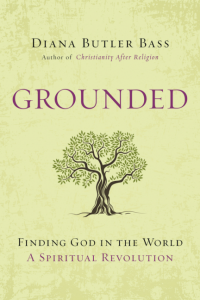
Grounded: Finding God in the World-A Spiritual Revolution, by Diana Butler BassFinding God in the World—A Spiritual Revolution
Polls, surveys, and media headlines all claim that religion in America is at an all time low. Fear and uncertainty may be tainting the ordinary, but in her newest publication Grounded, author Diana Butler Bass argues this religious decline is actually a spiritual revolution. People no longer see God as a distant being present only in holy spaces and rare encounters but experience him in the events and spaces of everyday life. Using statistics, texts, and stories, Bass outlines the political, cultural, and social effects of this radical shift in how people understand God and cultivate faith into world-changing potential.

In an excerpt provided by News and Pews from publisher HarperOne, Bass writes:

“In the twenty-first-century world, top-down institutions and philosophies are weakening—and that includes top-down religions. People are leading their own theological revolution and finding that the Spirit is much more with the world than we had previously been taught…

The problem of evil is real. (It is worth noting, however, that human beings create the vast majority of what we deem evil. Evil is not God’s problem as much as it is ours.) But there is a widespread sense that God is with us, within creation, culture, and the cosmos. If anything, recent decades have revealed not a dreadful, distant God, but have slowly illuminated that an intimate presence of mystery abides with the world, a spirit of compassion that breathes hope and healing. And with it faith is shifting from a theology of distance toward a theology of nearness, from institution to unmediated experience.”

For more information on the publication, click here. Continue reading the excerpt here.

Diana Butler Bass is an author, speaker, and independent scholar specializing in American religion and culture. She has taught church history, American religious history, history of Christian thought, religion and politics, and congregational studies. Her other publications include Christianity After Religion: The End of Church and the Birth of a New Spiritual Awakening (2012) and the best-selling Christianity for the Rest of Us: How the Neighborhood Church is Transforming the Faith (2006), which was named one of the best religion books of the year by Publishers Weekly and was featured in a cover story in USA TODAY.

For more of “On the Lived Theology Reading List,” click here. To engage in the conversation on Facebook and Twitter, @LivedTheology, please use #LivedTheologyReads. To sign up for the Lived Theology monthly newsletter, click here.

On the Lived Theology Reading List: Revelation

Revelation: A Search for Faith in a Violent Religious World, by Dennis CovingtonA Search for Faith in a Violent Religious World


All over the globe today, regions are ravaged by chaos and violence often incited by religious convictions, leaving millions to suffer in the aftermath. In Revelation, author Dennis Covington treks across the world in search of the reason people have been able to survive: faith. The smallest appearances of faith in each other and the world, he argues, make even the darkest atrocities bearable. Based on years of research and fieldwork to areas like Syria, Mexico, and the American South, Covington pens a powerful narrative uncovering the evils of humanity and the glimpses of hope that save the souls left behind.

In a recent interview with The Clarion-Ledger, Dennis Covington states:

“I was looking for faith as it’s defined in Hebrews 11:1 as ‘the substance of things hoped for, the evidence of things not seen.’ I wasn’t looking for people who believed one thing or another. I was looking for a ‘substance.’ So the phrase ‘people of powerful faith’ doesn’t mean much to me, or at least I don’t understand what it means. I found ‘the substance of things hoped for’ in a number of places, as food, medical care, shelter and self-sacrifice. But as often as not, these actions had begun, and were being sustained, by people who professed to be non-believers. And many of them, believers and non-believers alike, lost their lives.”

For more information on the book, click here. Find an excerpt provided by the publisher here. To read Covington’s full interview with The Clarion-Ledger, click here.

Fellow travelers are scholars, activists, and practitioners that embody the ideals and commitments of the Project on Lived Theology. We admire their work and are grateful to be walking alongside them in the development and dissemination of Lived Theology.

For more of “On the Lived Theology Reading List,” click here. To engage in the conversation on Facebook and Twitter, @LivedTheology, please use #LivedTheologyReads. For more recommended resources from our fellow travelers, click here, #PLTfellowtravelers. To sign up for the Lived Theology monthly newsletter, click here.

Updates from the Field: Summer Internships Come to a Close

Students Reflect on a Summer of Service

The Summer Internship in Lived Theology is an immersion program designed to complement the numerous existing urban and rural service immersion programs flourishing nationally and globally by offering a unique opportunity to think and write theologically about service. The 2016 internship cohort included Tessa Crews (Col ’16), Brit Dunnavant (Col ’17), and Elizabeth Surratt (Col ’17).

“I hope to act as a steward of the Earth and an instrument of divine love. The garden feels like a fitting place to start.”

A 2016 graduate of U.Va.’s College of Arts and Sciences, Tessa Crews completed a summer internship at the Green Comfort School of Herbal Medicine in Washington, Virginia. Crews learned about integrating herbs, foods and supplements necessary to achieve optimal health and wellbeing and worked to educate the community about this mission. She was mentored by Vanessa Ochs and Teresa Boardwine.


“Perhaps God uses a theology of hospitality to dignify the margins, use the unprivileged to humble and teach the privileged, and to build community and friendship in the place of and across perceived social, racial and economic barriers.”

Britton Dunnavant, a fourth year student majoring in religious studies, spent his summer working at The Haven in Charlottesville. An organization working to end homelessness, The Haven runs a day shelter and administers housing-focused programming. With the help of his two mentors, Heather A. Warren and Stephen Hitchcock, Dunnavant reflected theologically on his duties in the kitchen and in working with other staff members and guests.


“I’m here to listen, to learn, and to love past the discomfort and the self-consciousness. Tension means stretching, stretching means growing, and growing means living, the way we were designed to live.”

Elizabeth Surratt is a fourth year student majoring in political and social thought with a minor in religious studies. Guided by mentors Nichole M. Flores and Mo Leverett, Surratt cultivated relationships with inner city middle school girls through an internship with Rebirth Community Ministries in Jacksonville, Florida. Rebirth’s mission involves mentoring next-generation urban ministry entrepreneurs in the most at-risk American communities.

The interns will give a public presentation of their work to share stories and reflections from their summer service experiences. The event will be held on September 15th at Common Grounds, located at the intersection of Rugby Road and Gordon Avenue in Charlottesville, Virginia. Light refreshments will be provided. See the Facebook event for details.

To read the intern blog compiled of each student’s reflections over the summer, click here.

For updates about the PLT Summer Internship, click here. We also post updates online using #PLTinterns. To get these updates please like us on Facebook and follow us on Twitter at @LivedTheology. To sign up for the Lived Theology monthly newsletter, click here.

Healing

Final Products

Here we are again. Sitting on the forest green sofa where I am taught to swallow my pride and reveal my heart. Three years ago I sat on this couch feeling lonely and embarrassed. I barely knew Teresa back then. She was simply a friend of my mother’s and I was now her completely exhausted patient. In 2013, I returned home for spring break twenty-five pounds thinner than I had been in the fall. My complexion was inflamed with acne and my thoughts were overwhelmed with personal criticism. Talking about my miserable body image was usually off limits. But Teresa gave me an avenue through which to crawl out of my cave of self-deprecation and into the loving embrace of herself, my family, and God.

I continued to struggle against my weight, my skin, and my mind for the duration of my academic career. Not because Teresa did not give me good formulas and thoughtful guidance. There’s only so much an herbalist can do when their patient continues to skip meals and abandons their medicinal regimen. Not until the winter of my fourth year did I realize that I needed to take time to care for myself… and doing so would increase my faith and love for the divine.

Tea and Flowers

So here we are again. Tears in Teresa’s eyes as I sit among eight of her best clinical students. Talking about my journey through school and my tussle with pain. And how we’ve come so far over these three years and especially over the course of this short two-month program. How marshmallow root has aided my digestion and white clay cleared my skin. And how her guidance has cleared my heart.

As the students put together nourishing broths, uplifting teas, and digestive tinctures, I discover how peony root works remove stagnation in the liver and red clover buds work to purify the blood. I also learn how a team of nine women can work with medicinal insight and a heartfelt compassion to help a patient overcome illness. I feel nourished on this sofa, not abandoned or alone. And here, I can feel God with me through these women. And through the taste of medicinal herbs.

For updates about the PLT Summer Internship, click here. We also post updates online using #PLTinterns. To get these updates please like us on Facebook and follow us on Twitter at @LivedTheology. To sign up for the Lived Theology monthly newsletter, click here.

I lift my eyes up to the hills – part 1

Rebirth Women in the Mountains

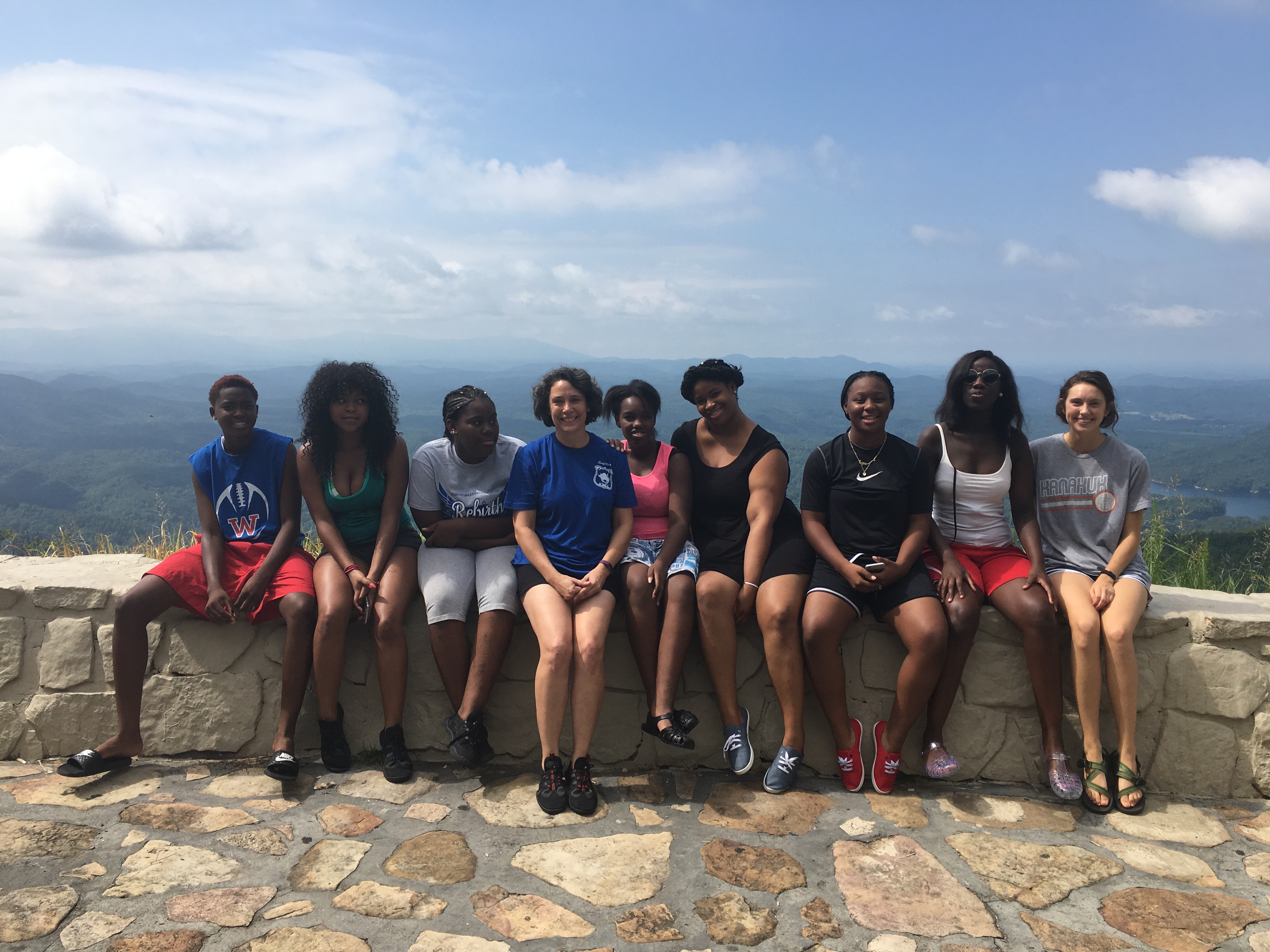
A few weeks ago, the women of Rebirth went on a grand adventure to the mountains of North Georgia. The seven-hour drive to get there might as well have been a trip on a rocket ship; for the majority of these girls, this was a whole new world. As the roads narrowed, the strip malls turned to farmhouses, and the rolling hills grew to looming mountains, the warm feeling of familiarity and comfort that always accompanies this landscape filled me with joy and excitement. At the same time that I was being reminded of the other place I call home, Virginia, my passengers were awestruck with the utter newness of it all, marveling at a part of creation they had never before seen and couldn’t yet comprehend. They all really wanted to know what a mountain would feel like to touch, and they were a little afraid of our cabin being too high because they thought we might slide down. I’ve always had a deep love for the mountains and would’ve been content had I been driving through them alone, but something about the juxtaposition of my familiarity and their discovery made that moment so much sweeter.

One of the major themes of the weekend was learning how to step outside of your comfort zone and trust God in the unknown. For me, the seven hours straight of rap and R&B music in the car was somewhat of a new experience. For the girls, the simple act of leaving Jacksonville was enough of a step outside comfort, as it was the first time for several of them being away from their families for a whole four days. But the stretching continued throughout the weekend, as we pushed the girls to try things they never thought they would, like going hiking, swimming in a waterfall, and eating a casserole with broccoli in it. (That one didn’t go over so well, but they all survived.)

The stretching worked both ways. The girls, by letting me into more of their stories and their lives, in turn pushed me to reframe what “normal” life is like. As I learned more about the harsh realities of their world back home, where just going to school each day is a “risk,” I found myself spending a lot of time thinking about where to find God in the face of the heavy darkness and oppression that these beautiful, spirited, and passionate girls encounter every day. I also meditated a lot on what my role might be in all of this. I must admit, I questioned my purpose and relevance in this ministry at several points this summer, mostly because of my own set of insecurities, and my questions came up some on the trip as well. I believe that God has created in me a heart that cares deeply for each of these girls, and wants to see them succeed and flourish, but I often find myself at a loss for what to do about any of it. My comfort zone is where I feel equipped and useful, and often I felt so utterly unable to provide these kids with anything important and unsure of what constituted the “right” thing to do or say in certain situations to be doing a “good enough” job. Much of this summer I have felt far outside my comfort zone, and the trip was no exception. I wanted so badly to be living out the values of justice, love, and reconciliation that I care so deeply about, but I felt paralyzed and unequipped to do so at times.

And then I read this in John Perkins’ memoir: “This is what makes the gospel so unique. It’s how beautiful are the feet of him who brings it – that’s the lowest part of the body. The purpose of the gospel is to burn through racial and social barriers. And how beautiful are the feet of those who carry the gospel. It’s not just tell, tell, tell – it’s love. It is the creative witness and the manifestation of that witness…When we need each other’s service we have meaning to each other. And when we understand the gospel, we see each other as equal. That’s reconciliation” (210).

So where I was worried about saying the right thing, or making the trip just right for them, or being fun enough for them to like me, the gospel meaning of it all was staring me right in the face even when I didn’t notice it. Every time we demonstrated our need for each other, our actions had eternal weight and pushed God’s Kingdom further into what was once ruled darkness and oppression. Any time I helped prepare a meal for them, or drove us to one of our activities, or they let me into their lives or showed me new dance moves, we helped each other see the humanity in the other, revealing God’s love in a real, tangible, and creative way. Whether we were hiking or dancing, how beautiful were our feet that brought the gospel to each other as sisters in Christ.

For updates about the PLT Summer Internship, click here. We also post updates online using #PLTinterns. To get these updates please like us on Facebook and follow us on Twitter at @LivedTheology. To sign up for the Lived Theology monthly newsletter, click here.