
 Spring Institute for Lived Theology 2016/2017 Author Series
The SILT 16/17: Can I Get a Witness? author series introduces the SILT participant authors and the historical figures they will be illuminating in their narratives. This week’s featured writers are Rev. Becca Stevens, researching William Stringfellow, Soong-Chan Rah, whose figure is Richard Twiss, and Donyelle Charlotte McCray, writing on Howard Thurman.
Rev. becca stevens Ι Figure: william stringfellow (1928-1985)
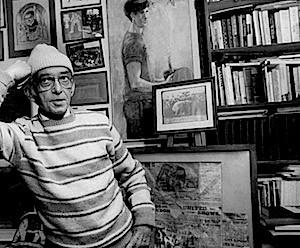 “The practice of the Christian life consists of the discernment of (the seeing and hearing), and the reliance upon (the reckless and uncalculating dependence), and the celebration (the ready and spontaneous enjoyment) of the presence of the Word of God in the common life of the world.” –Stringfellow
Born in 1928, William Stringfellow was an American social activist, human rights lawyer, and theologian. He first became involved in social activism in college by organizing a sit-in to protest segregation. After graduating from Harvard Law, Stringfellow worked as an attorney in East Harlem, representing the impoverished and the marginalized. He soon gained a reputation as a formidable critic of the social, military and economic policies of our country and as a tireless advocate for racial and social justice. As a Christian, he firmly believed that he had been committed in baptism to a life-long struggle against the “Powers and Principalities” and viewed Christianity as a call to dissent. Karl Barth recognized this and saw in Stringfellow’s writing a “theology of freedom” more concerned with proclaiming the gospel than with catering to the habits and fads of American society—a theology unwilling, as Stringfellow put it, “to interpret the Bible for the convenience of America.” Stringfellow remained active until his death in 1985.
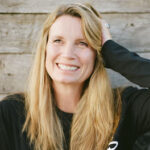
Becca Stevens is an Episcopal priest and founder of Magdalene, a residential community of women who have survived institutional and drug abuse. She is a prolific writer, and her works include The Way of Tea and Justice: Rescuing the World’s Favorite Beverage from It’s Violent History (2014) and Letters from the Farm: A Simple Path for a Deeper Spiritual Life (2015). She was inducted into the Tennessee Women’s Hall of Fame, and she was awarded an honorary doctorate by the University of the South.
soong-chan rah Ι FIGURE: richard twiss (1954-2013)
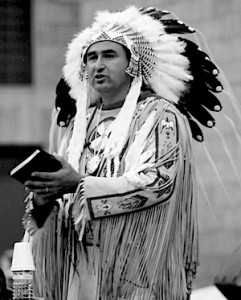 “How capable are we of bringing about authentic change if we don’t have voices from the margins?” –Twiss
Richard Twiss was a Native American educator and Christian minister, author, and public speaker. After graduating from high school, Twiss joined the activist American Indian Movement in its 1972 seizure of the federal Bureau of Indian Affairs building in Washington, D.C. to protest the government’s breaking of treaties. The incident left the 18-year-old Twiss filled with hatred toward white people and Christianity. After moving to Hawaii and becoming a self-described beach bum struggling with drug use, he converted to Christianity in 1974 during an overdose. In 1981, Twiss moved to Vancouver with his new wife Katherine, serving as a pastor at New Discovery Community Church in Vancouver from 1982 to 1995. Together the two founded the nonprofit Wiconi International in 1997. Twiss became the organization’s president, spreading his message of reconciliation, community, and spirituality at home and abroad. In 2000, Twiss co-founded and became chairman of the North American Institute for Indigenous Theological Studies. He also taught classes in Indigenous Nations Studies at Portland State University and served as a board member at the Native American Youth & Family Center in Portland and the Christian Community Development Association, founded by John M. Perkins in 1989. Twiss was in Washington, D.C., for the annual National Prayer Breakfast at the time of his death in 2013.
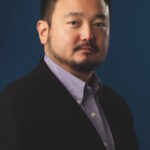
Soong-Chan Rah is the Milton B. Engebretson Associate Professor of Church Growth and Evangelism at North Park Theological Seminary in Chicago, IL. Rah is formerly the founding senior pastor of the Cambridge Community Fellowship Church (CCFC), a multi-ethnic, urban ministry-focused church committed to living out the values of racial reconciliation and social justice in the urban context. His publications include Prophetic Lament: A Call for Justice in Troubled Times (2015).
Donyelle Charlotte McCray Ι FIGURE: howard thurman (1899-1981)
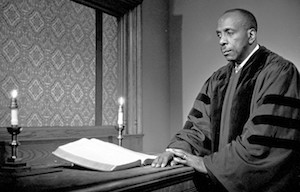 “The movement of the Spirit of God in the hearts of men often calls them to act against the spirit of their times or causes them to anticipate a spirit which is yet in the making. In a moment of dedication, they are given wisdom and courage to dare a deed that challenges and to kindle a hope that inspires.” –Thurman
One of the leading religious figures of twentieth-century America, Howard Thurman was the first prominent African American pacifist whose theology of radical nonviolence influenced and shaped a generation of civil rights activists, including Martin Luther King, Jr. Born in 1899, Thurman was raised in Daytona, Florida by his formally enslaved grandmother. In 1925, he became an ordained Baptist minister. His first pastorate, at Mount Zion Baptist Church in Oberlin, Ohio, was followed by a joint appointment as professor of religion and director of religious life at Morehouse and Spelman colleges in Atlanta, Georgia. Thurman spent the spring semester of 1929 studying at Haverford College with Rufus Jones, a Quaker mystic and leader of the pacifist, interracial Fellowship of Reconciliation. In 1936, he led a “Negro Delegation of Friendship” to South Asia, where he met the Indian leader Mohandas Gandhi and broadened his theological vision. Thurman served as dean of Rankin Chapel at Howard University from 1932 to 1944, leaving his tenured position there to help establish the Church for the Fellowship of All Peoples in San Francisco, the first major interracial, interdenominational church in the United States. He went on to serve as dean of Marsh Chapel at Boston University from 1953 to 1965, then after this, he continued his ministry as chairman of the board and director of the Howard Thurman Educational Trust in San Francisco until his death in 1981.
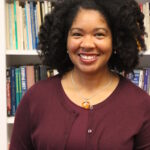
Donyelle Charlotte McCray is Assistant Professor of Homiletics, Director of Multicultural Ministries, and Associate Director of the preaching program “Deep Calls to Deep” at Virginia Theological Seminary and will join Yale Divinity School this fall as the Assistant Professor of Homiletics. Her primary research interests include homiletics, spirituality, Christian mysticism, and ecclesiology. She is the recipient of the Bell-Woolfall and the James H. Costen North American Doctoral Fellowships.
SILT 16/17: Can I Get a Witness? is a two-part SILT that will celebrate scholars, activists, laypeople, and religious leaders whose lived theologies produced and inspired social justice in the United States and will produce a single volume entitled Can I Get a Witness? Stories of Radical Christians in the U.S., 1900-2014. The first meeting will be held at the University of Virginia in June 2016; the second meeting will follow at Loyola University Chicago’s Water Tower Campus in June 2017.
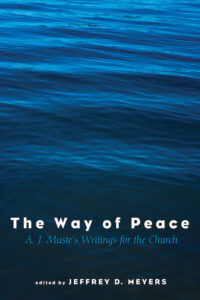 A. J. Muste’s Writings for the Church
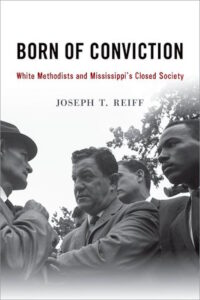 The Alternative Witness of “the Twenty-Eight” to 1960’s Segregation
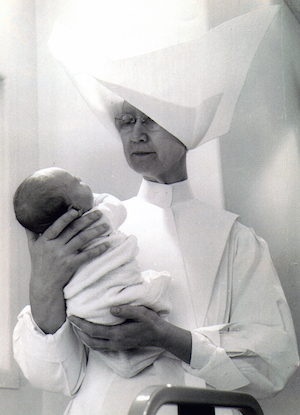 “I learned more about pediatrics there [Mound Bayou] than I ever learned in school, but most of all I learned about faith. I never had to spread the Gospel to the people there – in spite of all their hardships, their faith in God was unshakeable.” –Simpson
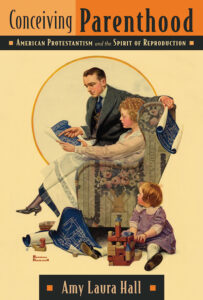 American Protestantism and the Spirit of Reproduction
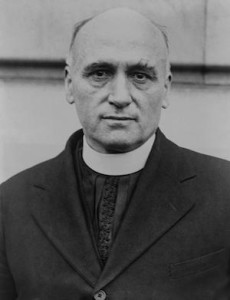 “A man’s dignity is outraged when he is deprived of the opportunity to live a reasonable life, in order that some other man or men may enjoy the superfluities of life.” –Ryan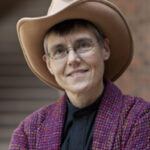
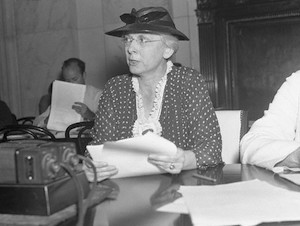 Born the daughter of an Episcopal clergyman in 1882, Lucy Randolph Mason held strong social convictions early on and dedicated her life to the labor and civil rights movements. Following her time with the Richmond Young Women’s Christian Association from 1914-1923, she was appointed the General Secretary of the National Consumers League, the leading national advocate of fair labor standards, and worked closely with the New Deal relief and welfare agencies. Five years later Mason became the Southeast public relations representative for the Congress of Industrial Organizations, negotiating on behalf of organized labor in unwelcoming communities. For the rest of her life, she worked to build bridges between organized labor and fought against segregation to end white supremacy in the South. In 1952 Mason was honored with the Social Justice Award from the National Religion and Labor Foundation; she retired soon after and died in 1959.
 On the Vital Connection between Religion and Global Health
 Rediscovering the Bible in Community
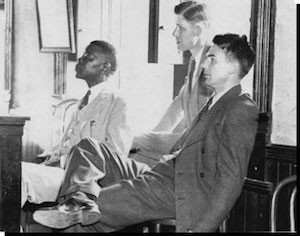 “I was talking about all the conditions that were confronting southern workers, particularly women… and they listened gladly because they had never heard it from the pulpit, and they felt that was what the church ought to be saying.”–Kester
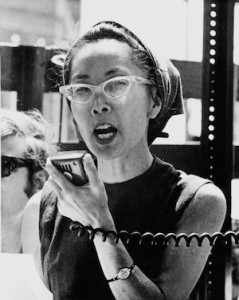 “Remember that consciousness is power. Tomorrow’s world is yours to build.” –Kochiyama
 Students Look Forward to Bright Futures
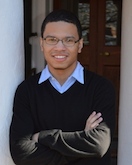 Alex was recently admitted into the University of Michigan’s Summer Research Opportunity Program. The summer program aims to provide intensive research experience to students who intend to obtain a Ph.D. in a field where they are underrepresented. Alex aims to obtain a Ph.D. in sociology, which he hopes to use examine and document social issues. For this summer, Alex will be working under the guidance of Dr. Sarah Burgard, an associate professor of sociology and epidemiology, on the Michigan Recession and Recovery Study. Dr. Burgard’s project aims to examine the impact of the recession on families, the effectiveness of social welfare programs, and health and socioeconomic disparities between Black and White families. According to Alex, this project is precisely the line of work that he hopes to do in the future. He is extremely excited about the opportunity to work on a project that may potentially have a positive impact on struggling families.
 A second year studying pre-medicine, Mareike has been accepted into the interdisciplinary Distinguished Majors Program in Human Biology. The Human Biology major allows students the opportunity to investigate the interplay between biology and society with the help of faculty from almost every school at the University, including the College of Arts and Sciences, the Institute for Practical Ethics, the Center for Global Health, the Law School, and the Medical School. Intended to prepare a small, select group of undergraduates to address the ethical, legal and policy issues raised by developments in the life sciences, requirements of the program include a fourth-year capstone seminar and the submission and formal presentation of a major’s thesis following independent research. Mareike is thrilled to join a program whose interdisciplinary curriculum she feels will tremendously support her aspirations of becoming a physician-scientist heavily involved in international medical mission work.