It seems I ran away again.

Rappahannock CountyIt seems I ran away again. Not away from home nor exactly to it… But to to an unstudied alcove of the serenely bizarre landscape in which I spent my childhood years. Rappahannock County. Just far enough from the bustling streets of college towns and downtown shopping districts. Where rolling hills are cohabitated by retired hippies and good ol’ boys alike. My mama always was a good ol’ hippie. I might have been one, too.

Upon discussing my geographic origins with fellow Virginia natives and university peers, I discovered a general unfamiliarity with this sliver of the Shenendoah Valley. Although it lies a mere hour and forty-five minutes south of Washington, D.C., the rural lifestyle is far from Northern Virginia normalcy. Many UVA students cannot imagine living in a county where the residential population is outnumbered by cows, the closest grocery store is a thirty-minute commute, and the graduating class of the public high school consists of a whopping forty-five students.

What I can’t really explain is the glorious—and quite unusual—relationship between people and land, reminiscent of Helen Macdonald’s portrait of Evelyn’s Travelling Sands. While there are plenty of misty Blue Ridge vistas and luscious forest sanctuaries in which to relish solitude, overall, the county is a ramshackle wildness in which people and the land have conspired to strangeness (Helen McDonald, H is For Hawk).

We have rituals here. Some inhabitants are likely to smudge sage along the river’s edge, honoring nature’s abundance and praying for divine guidance. Others choreograph masked dances for annual pagan theatre performances. Yet another villager burns sacred cow dung in their backyard agni-hotra fire ritual while the neighborhood church holds a Christian baptisms in the local swimming hole. There is a diversity of faith and persuasion, but all is connected to the land.
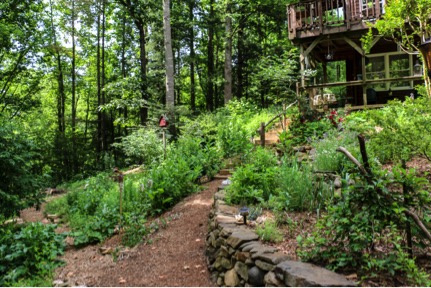
Green Comfort SchoolA seven-minute drive from my childhood home, I have come to explore the opposite corner of Castleton Village where the Green Comfort School of Herbal Medicine resides. Here, Teresa lives with her family in the lush landscaping of herb gardens, weaving herbal medicine into a practical career, spiritual path and means of expressing compassion for others. The physiological processes of healing are honored in correspondence with its emotional and faith-based dimensions. Such a form of medicine does not condone the sort of antibiotics that can be found in contemporary hospitals or pharmacies. Rather, it recommends the balance of ancient wisdom with modern scientific research, culminating in an integrated means of wellbeing, sense of environmental connectedness, and deepening of personal awareness.

Here we are. Let’s call it home for now.
For updates about the PLT Summer Internship, click here. We also post updates online using #PLTinterns. To get these updates please like us on Facebook and follow us on Twitter at @LivedTheology. To sign up for the Lived Theology monthly newsletter, click here.

On the Lived Theology Reading List: Tell Me True

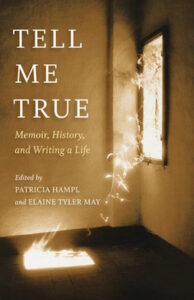
Tell Me TrueMemoir, History, and Writing a Life

Storytellling has always held an important place in human society, but what does it mean to separate fact from fiction in the process? Tell Me True is a collection of fourteen essays from award-winning memoirists and historians Patricia Hampl, Elaine Tyler May, Carlos Eire, D.J. Waldie, Andre Aciman, June Cross, Helen Epstein, Matt Becker, Samuel G. Freedman, Fenton Johnson, Alice Kaplan, Annette Kobak, Michael Patrick MacDonald, and Cheri Register. They show us how easy it is to question the distinction between memory and history, and regardless of the answer, how to tell us true.

In the book’s introduction, editors Patricia Hampl and Elaine Tyler May explain:

“The writers here – historians, journalists, poets, and fiction writers – are also memoirists. They – we – are caught in this complex rhythm, not masters of it. That is the point of this collection. For it is right here, in the contemporary tango of history and memoir, that crucial questions of narrative authority in our times are being resolved. Or perhaps not ‘resolved,’ any more than the mysteries of the past can be ‘solved.’ We have gathered testimony from the field – of play, of battle, of the writing of history and the writing of a life – from practitioners who have to contend with these devilish problems at the level of the paragraph and the sentence. Consider these essays, then, as dispatches from the front lines. The front lines of narrative documentary writing in our times.”

For more information on this book, click here.

Patricia Hampl is the Regents’ Professor and McKnight Distinguished Professor at the University of Minnesota where she teaches creative writing. She is also on the permanent faculty of The Prague Summer Program. Hampl specializes in personal essay, short fiction and poetry, memoir and autobiography, creative writing, and contemporary American poetry and fiction, especially the short story and the novel.

Carlos Eire became a professor of history and religious studies at Yale University in 1996. He specializes in the social, intellectual, religious, and cultural history of late medieval and early modern Europe, with a focus on both the Protestant and Catholic Reformations; the history of popular piety; and the history of death.

Fellow travelers are scholars, activists, and practitioners that embody the ideals and commitments of the Project on Lived Theology. We admire their work and are grateful to be walking alongside them in the development and dissemination of Lived Theology.

For more of “On the Lived Theology Reading List,” click here. To engage in the conversation on Facebook and Twitter, @LivedTheology, please use #LivedTheologyReads. For more recommended resources from our fellow travelers, click here, #PLTfellowtravelers. To sign up for the Lived Theology monthly newsletter, click here.

On the Lived Theology Reading List: To Live in Peace

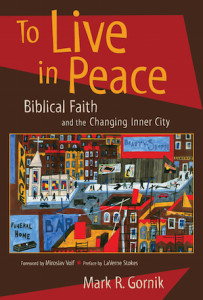
To Live in PeaceBiblical Faith and the Changing Inner City
Faith believers are called to understand and respond to the cries of their neighbors facing social and economic struggles in inner-city neighborhoods. In To Live in Peace, Mark Gornik shows us how Baltimore’s New Song Community Church can be used as a model for approaching community organizing and peacemaking within the context of Scripture. A testament to the power of a daring witness, the publication guides the church forward with proposals to overcome barriers to urban ministry and human flourishing.

PLT Director Charles Marsh reviews:

“This groundbreaking book offers us the most pervasively theological account to date of community building in an urban context. Like Dietrich Bonhoeffer’s Cost of Discipleship and Martin Luther King Jr.’s Strength to Love, Mark Gornik’s To Live in Peace is theological writing born of intense human struggle and conviction, a stunningly imaginative and powerful work. Gornik shows us, through both theological analysis and gripping narrative, that biblical faith matters greatly to the social existence of Christians: to the way we locate ourselves in towns and cities as well as to the way we respond to the challenges of civic responsibility and the brokenness of creation. . . I regard Gornik as one of the church’s most exciting theological thinkers, the kind of organic theologian we academics dream about but very rarely find. He’s the real thing.”

For more on this publication, click here.

Mark Gornik is the director of City Seminary of New York. Mark has spent the last 25 years of his life as a pastor, community developer and researcher in African churches in NYC and beyond. His other publications include Word Made Global: Stories of African Christianity in New York City (2011), co-written with Andrew Walls.

For more of “On the Lived Theology Reading List,” click here. To engage in the conversation on Facebook and Twitter, @LivedTheology, please use #LivedTheologyReads. To sign up for the Lived Theology monthly newsletter, click here.

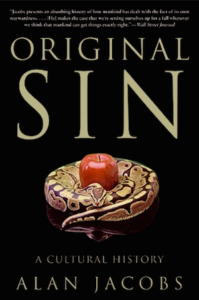
On the Lived Theology Reading List: Original Sin

Alan Jacobs - Original Sin: A Cultural HistoryA Cultural History

Controversy has always presided among the various doctrinal interpretations in religion, but perhaps none has created as much friction as that of original sin, the idea that humans are born into this world predisposed to evil and sin. For centuries, theologians have argued for and against the belief, and the debate continues today. In Original Sin, Alan Jacobs takes readers on a sweeping tour of the idea of original sin, its origins, its history, and its proponents and opponents. And he leaves us better prepared to answer one of the most important questions of all: Are we really, all of us, bad to the bone?

In an excerpt provided by HarperOne, Jacobs writes:

“It is the common fate of doctrines to be dismissed; you’d almost think that’s what they were made for… But of all the religious teachings I know, none- not even the belief that some people are eternally damned- generates as much hostility as the Christian doctrine we call “original sin.” It is one of the most “baleful” of ideas, says one modern scholar; it is “repulsive” and “revolting,” says another. I have seen it variously described as an insult to the dignity of humanity, an insult to the grace and loving-kindness of God, and an insult to God and humankind alike. And many of those who are particularly angry about the doctrine of original sin are Christians… What is this belief that generates such passionate rejection and such equally passionate defense?”

Read more on this publication here.

Alan Jacobs is the Distinguished Professor of the Humanities in the Honors Program at Baylor University. Jacobs’s work revolves around multiple interests, primarily literature, theology, and technology. His other publications include The Book of Common Prayer: A Biography (2013) and The Pleasures of Reading in an Age of Distraction (2011).

For more of “On the Lived Theology Reading List,” click here. To engage in the conversation on Facebook and Twitter, @LivedTheology, please use #LivedTheologyReads. To sign up for the Lived Theology monthly newsletter, click here.

PLT summer internship program marks seventh year

Summer 2016 interns begin work in Charlottesville, the Shenandoah Valley, and Jacksonville, Florida

Internship Banner

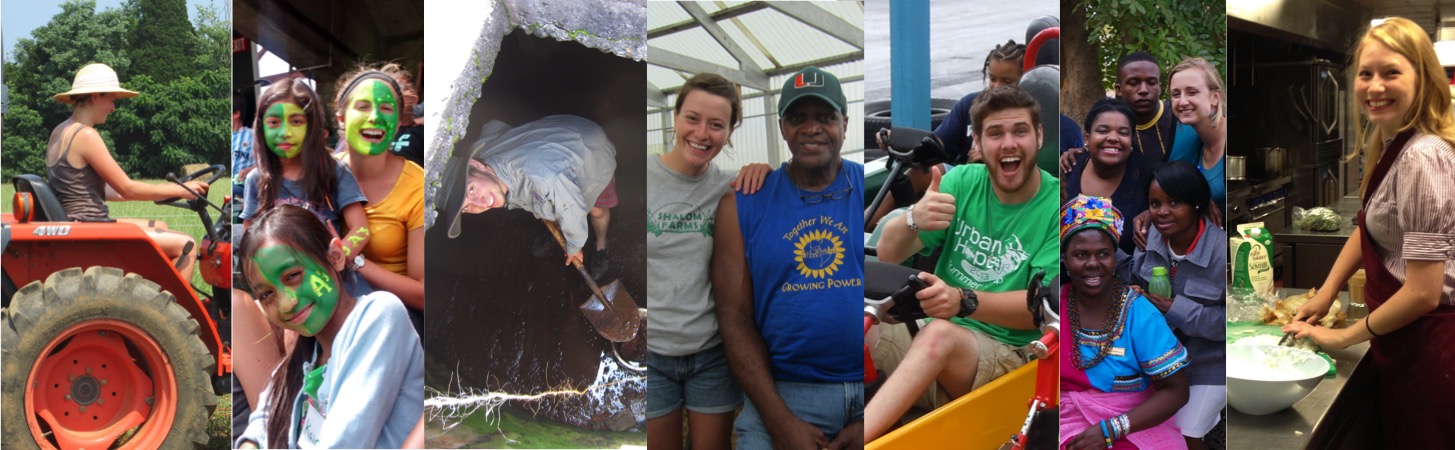
The 2016 Summer Internship in Lived Theology has begun. Tessa Crews (Col ’16) began her work at the Green Comfort School of Herbal Medicine several weeks ago, and we will begin publishing her blog reflections in the next two weeks. Elizabeth Surratt (Col ’17) starts her internship at Rebirth Community Ministries in Jacksonville, Florida, this week, and Brit Dunnavant (Col ’17), will begin working at The Haven next week.

Tessa, Elizabeth, and Brit mark the seventh consecutive class of the Summer Internship in Lived Theology. During the previous six summers, students have worked domestically in Washington, DC; Richmond, Virginia; Durham, North Carolina; Oakland, San Francisco, and Charlottesville; and internationally in the countries of England, South Africa, Burkina Faso, Nicaragua, and Kenya. We have coordinated with 15 community organizations and involved more than a half dozen U.Va. faculty in mentorship roles. Internship alumni have gone on to graduate studies, seminary, Teach for America, and to professions in areas of ministry, nonprofit work, nursing, community organizing, global health, finance, media, and social justice.

For updates about the PLT Summer Internship, click here. We also post updates online using #PLTinterns. To get these updates please like us on Facebook and follow us on Twitter at @LivedTheology. To sign up for the Lived Theology monthly newsletter, click here.


On the Lived Theology Reading List: Ecologies of Grace

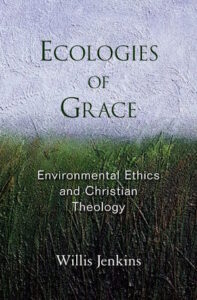
Ecologies of GraceEnvironmental Ethics and Christian Theology
Environmental crises may be at the forefront of today’s most pressing issues, but theology’s failure to evaluate the resulting situations and reactions offers little guidance to faith believers inspired to respond. In Ecologies of Grace, Willis Jenkins presents a field-shaping introduction to Christian environmental ethics that offers resources for renewing theology. Observing how religious environmental practices often draw on concepts of grace, Jenkins maps the way Christian environmental strategies draw from traditions of salvation as they engage the problems of environmental ethics. By being particularly sensitive to the ways in which environmental problems are made intelligible to Christian moral experience, Jenkins guides his readers toward a fuller understanding of Christianity and ecology.

PLT Director Charles Marsh reviews:

Ecologies of Grace is a stunning intellectual achievement and an interdisciplinary tour de force. While offering important conceptual clarifications of the major schools of environmental ethics, and framed within an essential rethinking of the Christian doctrines of salvation, creation and redemption, Willis Jenkins illuminates the promise of creative theological writing for the sake of the common good. This luminous book speaks not only to scholars of religion, students and ethicists, but also to policy makers, activists, clergy, and anyone concerned about the fate of the earth. Not to be overlooked, Jenkins presents his considerations with generous portions of well-crafted narrative.”

Find more information on the book here.

Willis Jenkins is the director of the religious studies graduate program at the University of Virginia and an associate professor of religion, ethics, and environment. Jenkins has authored two award-winning books and has also written a number of papers. He is currently working on three projects: a monograph entitled “The Moral Ecology of Food,” a textbook introducing religion, ethics, and environment, and a handbook to religion and ecology.

For more of “On the Lived Theology Reading List,” click here. To engage in the conversation on Facebook and Twitter, @LivedTheology, please use #LivedTheologyReads. To sign up for the Lived Theology monthly newsletter, click here.

David Dark Dissects Chance the Rapper’s Embodied Theology

On the Artist’s Faith and Latest Album, Coloring Book
While Christian music too often seems shrouded in an apathetic redundancy no longer phased by the ideas of God, love, and grace, Chance the Rapper reclaims the impassioned authenticity of Christianity with his songs. In his latest article, “I Speak to God in Public: Chance the Rapper’s Faith,” PLT Contributor David Dark explores the lyrics that boldly proclaim the artist’s faith convictions. The separation of the spiritual and secular may be what society is pushing for, but Chance disbands the divide with the release of his latest album, Coloring Book. The result is the potential for beholding blessedness and glory.

In the article, featured on MTV’s website, Dark concludes:

Coloring Book won’t be boundaried up. It’s made up of songs of innocence and experience, and full humanity requires both. We need a profound and ongoing recognition of both to keep from becoming hopelessly estranged from ourselves. It’s a process Chance the Rapper chronicles with wit and wonder: “You must’ve missed the come-up, I must be all I can be / Call me Mister Mufasa, I had to master stampedes.” In Chance, we have a chronicler determined to be a living and loving witness to his own experience. We also have, on the authority of Irenaeus of Lyons, a second-century Church father, that a glory of God is a human being fully alive. Maybe there’s glory to behold here. Maybe there’s glory everywhere. Are you ready for your blessing?

To read the full article on MTV’s website click here.

David Dark is an assistant professor at Belmont University in the College of Theology and Christian Ministry and also teaches at Riverbend Maximum Security Institution. His publications include Life’s Too Short to Pretend You’re Not Religious (2016), The Sacredness of Questioning Everything (2009) and The Gospel according to America: A Meditation on a God-blessed, Christ-haunted Idea (2005). 

For more of featured writings of our PLT Contributors, click here. To engage in the conversation on Facebook and Twitter,@LivedTheology, please use #LivedTheologyWrites. To sign up for the Lived Theology monthly newsletter, click here.

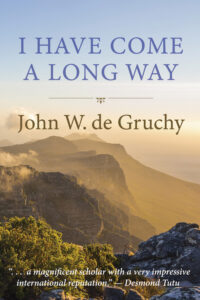
On the Lived Theology Reading List: I Have Come a Long Way

I Have Come a Long Way, John W. de GruchyA Memoir

Renowned South African theologian John de Gruchy inspires many through his roles as minister, professor, researcher, and writer. In the newly published I Have Come a Long Way, he reflects on a life lived well, tracing his Viking ancestry through his work as an ecumenical activist for the South African Council of Churches to the present. Rated an A research scholar by the National Research Foundation, De Gruchy specializes in the theology of Dietrich Bonhoeffer, whose thought undoubtedly influenced the anti-apartheid leader’s own work in local reconciliation. Weaving this foundational thought throughout the autobiography, de Gruchy narrates an inspirational story still in the making.

De Gruchy reflects:

“If my life and experience is of some interest, it is chiefly so because I have lived through interesting times, in an interesting country, traveled to many interesting places, and been accompanied along the way by interesting folk.”

For more information on the book, click here.

John de Gruchy was the Robert Selby Taylor Professor of Christian Studies at the University of Cape Town before he retired in 2003 and was appointed a Senior Research Scholar at UCT and an Extraordinary Professor at the University of Stellenbosch. He remains active in both institutions, engaged in research, publishing and mentoring. His other publications include Confessions of a Christian Humanist (2006).

For more of “On the Lived Theology Reading List,” click here. To engage in the conversation on Facebook and Twitter, @LivedTheology, please use #LivedTheologyReads. To sign up for the Lived Theology monthly newsletter, click here.

Google Creates Colorful Doodle to Celebrate Yuri Kochiyama

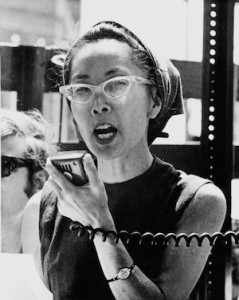
Yuri Kochiyama

Google Celebrates Activist Yuri Kochiyama’s Legacy with Doodle Art for her 95th Birthday

Google produced a colorful doodle to celebrate the birthday and legacy of Yuri Kochiyama, an Asian-American activist who fought for human rights and justice. Kochiyama was a life-long activist at the forefront of issues in the black, Latino, Native American and Asian American communities. She was involved in many movements including Malcolm X’s black nationalism, Puerto Rican independence, and attaining reparations for Japanese-American internees. A 2005 Nobel Peace Prize nominee, Kochiyama died in 2014, but her legacy continues to inspire younger generations of activists today.

Grace Yia-Hei Kao is writing on Yuri Kochiyama as part of our upcoming Spring Institute for Lived Theology 2016/2017. SILT 16/17: Can I Get a Witness? is a two-part SILT that will celebrate scholars, activists, laypeople, and religious leaders whose lived theologies produced and inspired social justice in the United States and will produce a single volume entitled Can I Get a Witness? Stories of Radical Christians in the U.S., 1900-2014. The first meeting will be held at the University of Virginia in June 2016; the second meeting will follow at Loyola University Chicago’s Water Tower Campus in June 2017.

For more details about the Spring Institute for Lived Theology 2016/2017: Can I Get A Witness? initiative, click here. We also post updates online using #SILT. To get these and other news updates, please like us on Facebook and follow us on Twitter @LivedTheology. To sign up for the Lived Theology monthly newsletter, click here.

Can I Get a Witness: Daniel Berrigan

Spring Institute for Lived Theology 2016/2017 Author Series
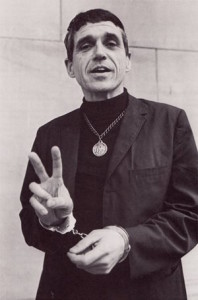
The SILT 16/17: Can I Get a Witness? author series introduces the SILT participant authors and the historical figures they will be illuminating in their narratives. This week’s featured writers is David Dark, whose figure is Daniel Berrigan.


David Dark Ι Figure: daniel berrigan, S.J. (1921-2016)


Daniel Berrigan“There is no peace because there are no peacemakers. There are no makers of peace because the making of peace is at least as costly as the making of war – at least as exigent, at least as disruptive, at least as liable to bring disgrace and prison, and death in its wake.” Berrigan

Daniel Berrigan, S.J. was a Catholic priest whose life was punctuated with bold acts of nonviolent social action. Born in 1921, he grew up in an Irish Catholic family in Minnesota and joined a Jesuit seminary after high school. He became an ordained priest and traveled to France where he was influenced by the worker-priest movement and ideas of civil disobedience. Berrigan returned to the U.S. in 1954 and began teaching in colleges, including Le Moyne College in Syracuse, Cornell, and Yale. Another European tour ending in 1964 inspired him to join the protest against America’s burgeoning intervention in Vietnam and become one of the Catonsville Nine, a group of Catholic activists who destroyed draft records in 1968 Maryland. Avoiding his prison date earned him a spot on the FBI’s Ten Most Wanted List, but he eventually served two years in prison and was released in 1972. Other protests followed, leading to more arrests and prosecutions. From 1970 to 1995, Berrigan spent a total of nearly seven years in prison. He continued his peace activism, co-organizing the antinuclear Plowshares Movement and protesting against the 1991 Gulf War, the Kosovo War, the U.S invasion of Afghanistan, and the 2003 invasion of Iraq. Berrigan spent his last years living in a Jesuit community in New York City where he continued to conduct retreats, speak publicly, and write before his passing on April 30, 2016.

David Dark is an assistant professor at Belmont University in the College of Theology and Christian Ministry and also teaches at Riverbend Maximum Security Institution. His publications include Life’s Too Short to Pretend You’re Not Religious (2016), The Sacredness of Questioning Everything (2009) and The Gospel according to America: A Meditation on a God-blessed, Christ-haunted Idea (2005).


SILT 16/17: Can I Get a Witness? is a two-part SILT that will celebrate scholars, activists, laypeople, and religious leaders whose lived theologies produced and inspired social justice in the United States and will produce a single volume entitled Can I Get a Witness? Stories of Radical Christians in the U.S., 1900-2014. The first meeting will be held at the University of Virginia in June 2016; the second meeting will follow at Loyola University Chicago’s Water Tower Campus in June 2017.

For more details about the Spring Institute for Lived Theology 2016/2017: Can I Get A Witness? initiative, click here. We also post updates online using #SILT. To get these and other news updates, please like us on Facebook and follow us on Twitter @LivedTheology. To sign up for the Lived Theology monthly newsletter, click here.